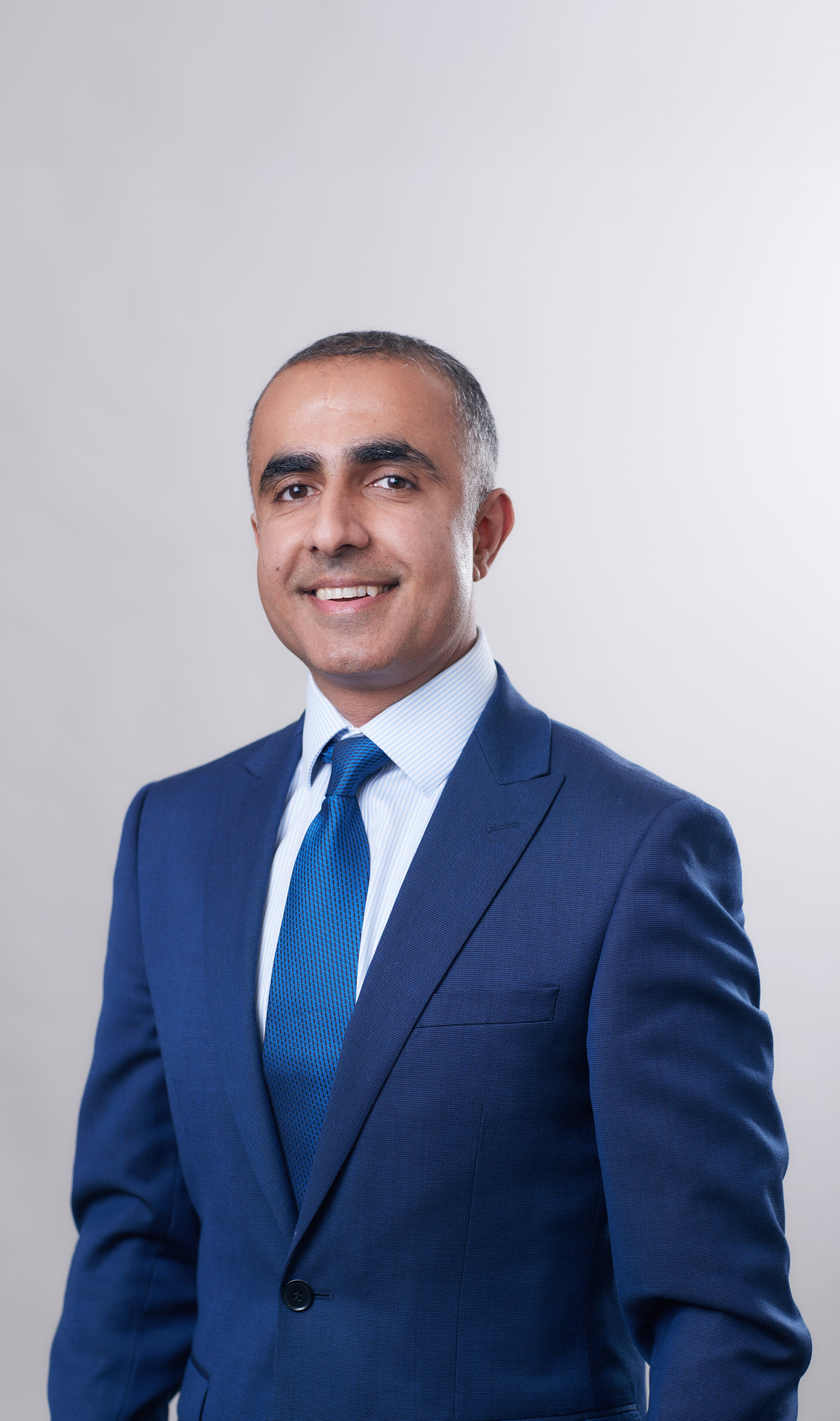
Asked about the current landscape for alternative fixed income, Sid Chhabra says that first of all it’s of course a very broad topic and that there are currently many different themes playing through concurrently in the macro landscape.
“You have the geopolitical theme, an AI theme as well as the monetary and fiscal themes – each one taking a different portion of investor’s mindset in terms of what is interesting at what particular point of time,” he says and adds that this has been the playbook that’s been with us now for two years.
Right now, it’s geopolitics that’s getting more attention, but he says that what’s common among the themes is that they are creating more dispersion in credit markets.
“It’s creating more dispersion not only in single names but also across sectors. The take-away for me is that what we’ve seen over the last few years – and which is likely to stay with us for the next few years – is that it will be a continuation of the same broad playbook of dispersion. If we go back to the years prior to 2022 when rates were very low, valuations were stretched and lending happened at elevated leverage multiples. More lending happened at elevated leverage levels and so the cushion to absorbing risk therefore decreases when risks appear,” he explains.
Asked about how to compare alternative credit to public credit, Sid Chhabra says that client discussions are very much focused on what they should do with their portfolios for the next three to four years, given this backdrop.
“We have a lot of discussions on how portfolios should be structured to absorb whatever new risk factors that might come going forward. This is why alternative credit is very topical right now, because sometimes traditional plain vanilla corporate credit or passive private credit may not offer all of what’s needed to protect income,” he says. He adds that historically private credit was about adding to income by capturing the illiquidity premium.
“Some of this is being questioned today because by locking up capital in private credit, there’s very little ability for you to risk manage your portfolios. That was probably OK in a world where interest rates were zero and valuations were sort of broadly increasing,” he says.
He adds that today investors are thinking about alternative credit much more broadly than before and within that equation, some source of liquidity and active management is very interesting.
Asked if too many parts of the market were priced to perfection during the period of zero interest rates and if that’s why we are now seeing headlines in media about problems in for example private credit – Sid Chhabra says yes.
“It’s down to the fact that low rates led to higher leverage and higher leverage means that ultimately you can’t absorb the risks that emerge. Higher interest rates have an immediate impact because your cash flow cushions decline and the only way to offset that is continued strong growth. But the reality is that in a world where the results of higher rates are higher inflation, perhaps some less affordability, varying job markets, higher energy costs and supply chain disruptions – there was possibly a lack of enough growth of revenues to offset those issues of a higher cost base and higher interest expense,” he explains.
Talking about considerations one must take today considering this new environment, Sid Chhabra says that investors and clients are really carefully when thinking about the illiquidity premium on offer, and if it’s justified relative to what could be a world where risks keep changing and emerging.
“Are you being sufficiently compensated for the illiquidity premium? Maybe you can get similar returns as the illiquidity premium in a more active managed vehicle. Investors are asking themselves what it is that they really want to get from alternative credit relative public credit or traditional plain vanilla credit, and they ask if they can get it in a way where the risk exposures are actively managed. One area that we have worked a lot on is securitized credit, which is gaining a lot of popularity,” he says. He adds that another area where there is increased client interest is their multi-strategy offering, which is investing across different sectors such as developed market credit, emerging market credit and securitized credit.
Asked how open investors are to multi-strategy, given the fact that many larger institutional investors typically allocate fairly strict within different buckets, Sid Chhabra says that this is still true when it comes to the traditional public credit allocations of investment grade and high yield.
“However, when they think about all the other sources of alternative allocations, this is increasingly interesting. Traditionally when investing in private credit you lock up your capital for a number of years and you are exposed to the changes that are happening. I think we have recognized, and clients have recognized, in the last three to four years the impact this can have,” he says.
To conclude the interview, Sid Chhabra reflects on the type of questions that seems to be top of mind of investors right now and says that it’s very much centred on finding the right type of alternative credit for the environment we are in. “The right type of alternative credit isn’t the same as it used to be where we were in and around COVID or indeed before that and just after that. It’s different today,” he says.