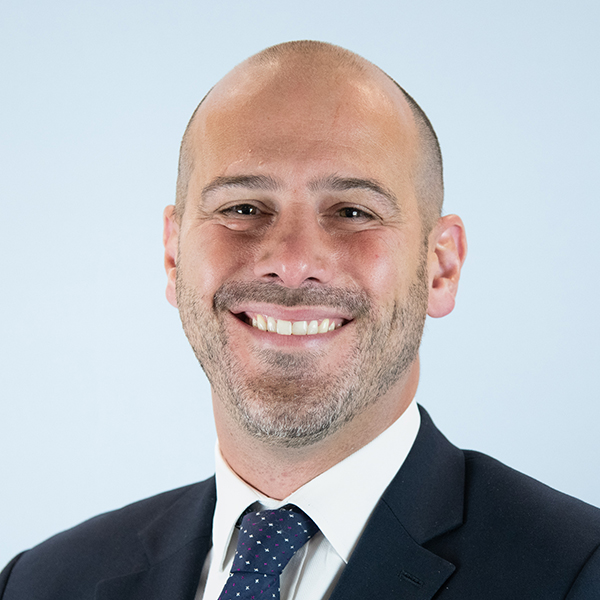
Asked to frame the current market, Steve Alvarez, director in the alternative investment distribution team at Lazard, says that with equity markets trading at historically high valuations and with credit spreads tight the risk is certainly skewed to the downside.
He says that Rathmore is an alternative strategy that was launched pre-global financial crisis – a global hedged convertible strategy that seeks absolute returns.
“So, what is a convertible bond? It’s a fixed income instrument like any other. It has a set maturity, and the typical maturity profile is around five years. It pays a coupon like any fixed income instrument, and it’s typically been issued by capital hungry, fast-growing companies. If these types of companies were going to finance themselves via traditional methods, in today’s interest rate environment the coupon required could be quite excessive. Via the convertible bond, there is a very big advantage to the issuing companies that you can reduce that financing costs significantly. Instead of a 10 per cent coupon that would instead be around 2.5 per cent, which is made possible thanks to the option to convert your bond at your choosing over the life of the instruments into a set number of shares,” he explains.
He says that over the life of the Rathmore strategy, since the mid-2007 launch, the annualized return of the Russell 2000 index has been 7.7 per cent. The global convertible bond index has had an annualized return of 7.3 per cent.
“The asset class provides equity-like return potential over the fullness of time, but with a significantly different volatility profile. The annualized volatility of the Russell 2000 is north of 25 per cent and for the global convertible bond index it’s about 8.5 per cent. The Rathmore approach takes that one step further as it looks to remove the most significant driver of risk within the asset class – the underlying equity sensitivity,” he says.
He explains that the convertible bond is going to be sensitive to all credit-related factors, such as corporate credit spreads widening and tightening. It’s going to be sensitive to interest rates moving higher and lower. He adds that the underlying value of each stock is going to be the most significant driver of value of that asset class on any given day.
“When you think of the Lazard Rathmore strategy at its core, it’s a portfolio of hedge pairs. We want to own 100 or so convertible bonds positions. In every one of those line items, we are going to assess what that bond’s sensitivity is to its own underlying common stock and we are going to short the appropriate number of shares to remove the inherent equity sensitivity within the trade. It’s a relative value fixed income trade,” he says. He adds that it’s a portfolio where you have a long portfolio of instruments that are senior in the capital structure and you’re short a number of instruments that are junior in the capital structure. He further explains that the mandate for the Rathmore strategy is to deliver the risk-free rate plus 5 per cent and to deliver that with a volatility profile that is investment grade like in nature.
“You receive a coupon from your long convertible bond position, which in a higher interest rate environment would be in the 2 to 4 per cent area. In every one of the positions, we are required to be short equity and the annualised borrowing costs on average for our portfolio is remarkably low. To borrow shares for a year will costs less than a quarter of a per cent. The cash we receive from selling the short equity are invested at the OBFR, the overnight borrowing rate, giving us additional income,” he says.
He explains that in short you hold the convertible bond and you receive the coupon. Then you short the underlying equity, and you receive a short rebate, which provides a positive carry inherent within the trade at very low risk. However, the short position needs to be continuously adjusted as the underlying share price will move higher or lower. In that continuous process of buying low and selling high you’re crystallizing what the Rathmore team refer to as a volatility yield. These are incremental gains that can bolster the overall return of the strategy.
“The current environment is very beneficial for this strategy. The team refer to the total return opportunity of the hedge pair, as the implied credit spread. Coupon plus the short rebate plus accretion plus an expectation or an estimate on what that volatility yield might be on a forward one-year-looking basis. At the end of January, the total return opportunity for a hedged allocation across the U.S. non-Investment Grade convertible bond market stands at 9.8 per cent over the risk-free rate [according to Lazard]. As mentioned earlier, we’re targeting the risk-free rate plus 5 per cent. With the opportunity approaching 10 per cent it means you can kind of have your cake and eat it as the team has been able to move the risk profile of the strategy into something that has arguably been as defensive as it ever has been over the 18 years,” he says.
Concluding the interview, Steve Alvarez says that if you compare the strategy to a position in a football team it would be a defensive midfielder.
“I would regard it as Declan Rice. A very hardworking midfielder and in an environment where the other team is attacking and there’s risk, we can put in the strong, important defence tackles. We protect the downside. But if there’s an opportunity to break and the team can surge forward, Declan Rice will join the attack. If you have an environment where equity volatility is working in your favour, there is an opportunity here for outsized returns as well,” he says.