Discussing trends in manager selection

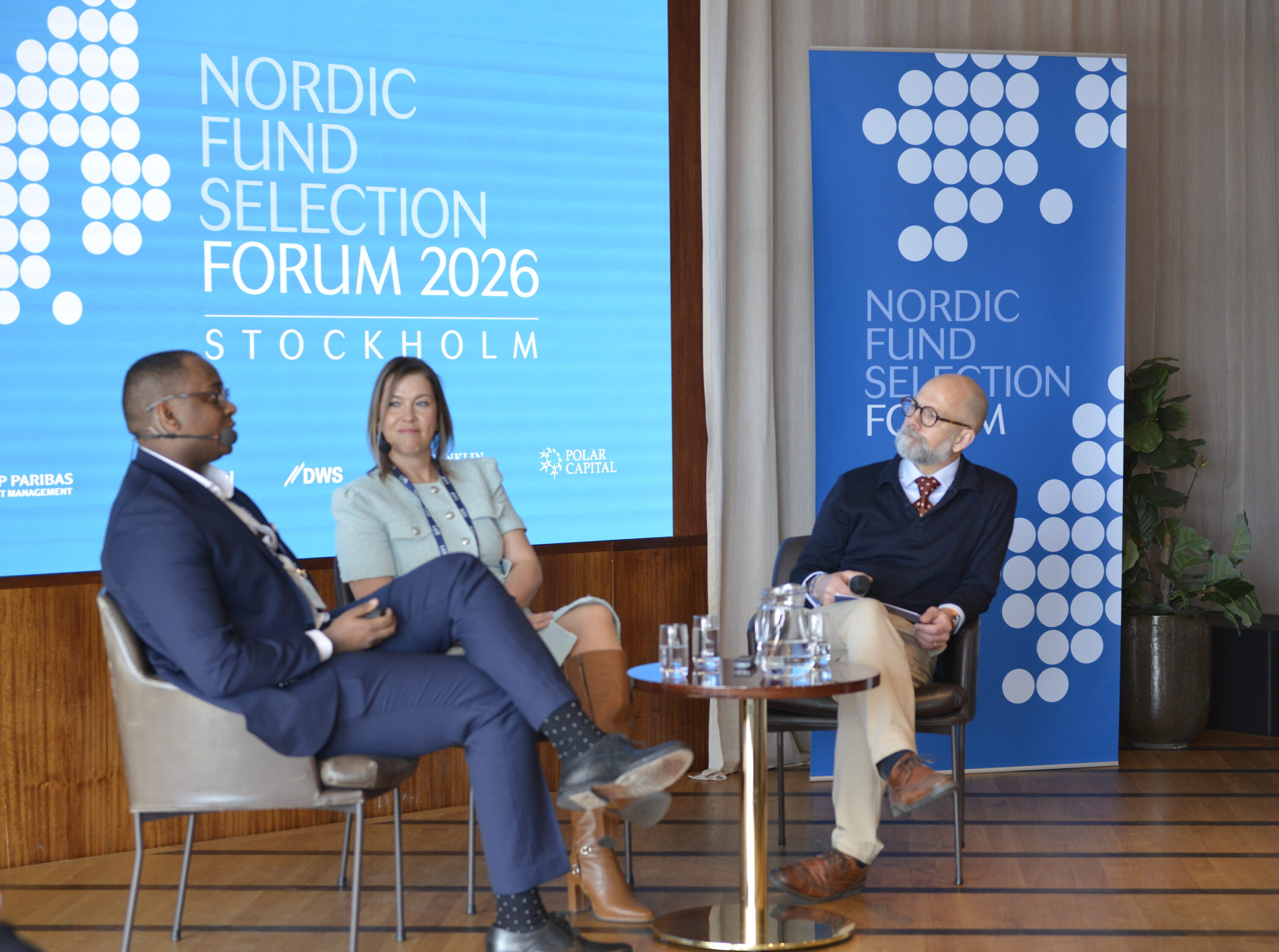
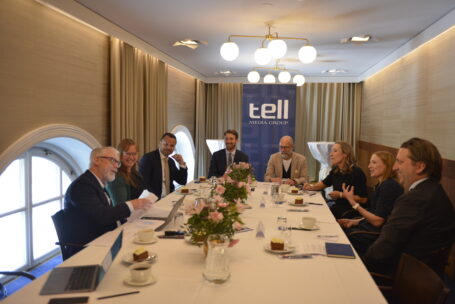
At the end of April, Tell Media Group hosted its 19th annual Nordic Fund Selection Forum in Stockholm where Ahmed Mohamoud from bfinance and Johanna Juujärvi from Finnish Aktia shared their thoughts on trends in manager selection. This is a summary of that panel discussion.
START

The panel discussion started with each of the panellists sharing their thoughts on the one thing fund managers can do better to help fund selectors excel in their job.

Johanna Juujärvi: “I would like to highlight consistency, which is important to us. It starts with your competitive edge. What is the inefficiency that you’re targeting in the market? How does this translate to excess return – and in what kind of risk budget? What are your resources? That’s the consistency and that’s what I look for. It makes life much easier when there is a clear storyline that’s backed by facts.”

Ahmed Mohamoud: “I think you’ve answered for me as well. I’ll probably just add that it’s also about the team and how things work. We of course have access to a lot of data, so for us the access to the managers is probably the most important thing. It’s about understanding how they work and understanding the team dynamics, in order to then confidently explain their investment philosophy and process.”

What can you do to help fund managers do a better job in their interaction with selectors and other gatekeepers?

Johanna Juujärvi: “We need to be better in communicating what it is that we’re looking for. What’s currently on our table and what are we focusing on – and perhaps why we’re not taking a meeting right now. We do try to meet as many portfolio managers as we can – even if we don’t have an active search in that specific asset class. It helps us build a broad and deep research archive and we’re able to go back to those notes when we do a search. Unfortunately, there’s not enough time, but hopefully AI will help us save time elsewhere so that we can spend more time on face-to-face dialogues.”

Ahmed Mohamoud: “I completely agree. Providing feedback to fund managers is very important. It helps them understand the reasons why they’ve been selected – or not selected for a mandate, and it also helps them improve their processes.”

Johanna – what would you say are some of the key factors influencing the art and science of manager selection today?

Johanna Juujärvi: “Well, the key thing is that this is a people business. We have all the data that we need so we can figure out who’s been good historically. However, what’s important of course is the qualitative analysis and understanding the people behind the numbers. We need to understand who is influencing the decision-making.”

Ahmed Mohamoud: “The team dynamics is very important and that’s why we need to have that access. A company can have a fantastic RFP team who produce great content – but it’s not until you meet and interact with the team that you start to get an understanding of the dynamics.”

Ahmed – how would you say that AI is influencing what you do on a day-to-day basis?

Ahmed Mohamoud: “I would say that as of today it’s about improving efficiency. That’s really where AI is helping us. I think where we can add value as individuals is that judgment layer. What we’re trying to do is speed up the work that we do and for example how we can customise our reporting for clients. It’s about focusing on how we can improve things, improve the output, but still have that layer of judgment and consistency.”

Johanna Juujärvi: “When we have Zoom or Teams meetings organised by the fund manager, we appreciate it if we receive the transcript so that we can also use it on our AI feed. AI tools do save a lot of time, but you must make sure that it’s not hallucinating. We must also ensure that we don’t shift our focus just because we have access to new things. We need to focus on the things that are making us comfortable being invested in our managers also when the time is tough.”

So, you have all this data and now you have AI and technology to manage that data. Is there a risk that we miss things that are also important outside of that data – such as the culture of the asset manager or behavioural factors?

Johanna Juujärvi: “I would say no. We put a lot of emphasis on the qualitative analysis at Aktia, so that’s not the problem. What I hope is that AI will help us become more efficient and that it will help reduce costs across the board. That hopefully means that we have better beta products on the one hand and attractive active products on the other.”

Ahmed Mohamoud: “I completely agree with that. Last week I spent time speaking to Malaysian, Indian as well as European equity managers. How can we use AI to do the heavy lifting of simpler tasks so that we can spend most of our time on the qualitative side – getting to know managers, getting to know teams, asking the right questions and getting a real comfort with the investment process.”

Would you say that you have the access to managers that you need?

Ahmed Mohamoud: “It depends. With bigger, global managers it’s no problem – but there can sometimes be issues with smaller, regional managers. Some of them are not used to meeting with manager selectors and developing relationships and access can be a bit tricky. This has been the case previously in the Middle East for example, where local managers were used to working with local clients only. Over successive mandate engagements, the access does improve and part of that process is providing effective and timely feedback.”

How do you balance your view if you find an excellent manager, but they work for a firm that’s not so great – maybe from a sustainability point of view or a culture point of view?

Johanna Juujärvi: “The culture matters quite a bit of course. That’s the first thing, because it’s the home of the strategy. Will the team that we’ve found get the resources they need today but also tomorrow? I find it a bit difficult when there is separate thinking on sustainability – if that is seen as a separate sleeve. This is a dialogue that we have internally. What do we think about this? How do we rate this? It does have an effect. If we find a similar manager at a better home, that’s a plus because that provides more stability.”

What’s your thinking when it comes to different incentive models?

Ahmed Mohamoud: “I’ve actually been thinking about this for a very long time. You can have the best incentive structures in place but still have a portfolio team leave the firm. As a manager selector you must understand both the incentive structure as well as the soft factors that ties a team to the firm, such as culture of the firm for example – is the team supported by the firm? We’ve had instances where there’s claims of a relationship between different teams, but when you walk into the offices, the culture is not in line with stated expectations. You need to understand the soft factors, and you really need to meet the managers before you can make that judgment.”

Johanna Juujärvi: “This is a great question – not least considering the consolidation we’re seeing in the industry. An ownership change is always a reason for us to interact more frequently with our managers. Will there be pressure to increase assets, will the managers start to feel the stress from them needing to travel more? Will the new owner be ok with a period of underperformance if it’s explained by the features of the strategy or will they push for change?”

What’s your take on the active vs. passive debate? Are we at peak passive and do you see pockets in the market where active is becoming more interesting?

Ahmed Mohamoud: “It’s been a tough time for global active managers in general, because you’re either fighting off competition from a small number of tech stocks, or you are now fighting off diversification away from that and you may not be aligned stylistically. So, it’s been hard for some managers to create alpha. What we’re seeing is that clients are coming to us on a regular basis to talk about portfolio diversification. We’ve also seen things like benchmark reshaping – moving away from the US to other areas and allowing the mandates to become a bit more flexible. We’ve also seen that clients who are passive are considering going active. They may not be comfortable taking on a lot of risk straightaway, so we’re seeing an increase in the number of searches we do for enhanced index or systematic low-tracking error type of products.”

Johanna Juujärvi: “First I would say that passive is here to stay, but passive is evolving as well. Also, even if you decide to go with a passive strategy, you do take active decisions because you need to decide which index to follow and you need to decide what exposure you want to have. How diversified do you want your US exposure to be for example. That said, there is of course pockets of value for active managers to exploit.”

What are some of the questions that you wish you got more often, either from fund companies or from your clients?Ahmed Mohamoud: “I wish sometimes that fund managers would put more effort into understanding how we think and how we work as fund selectors. That could be really helpful. From the client side it really does vary. Sometimes you’re in certain regions where they may not ask many questions. Other times, you are in a heated debate with investors, and you’re trying to meet in the middle to find the right solution for them. At the end of the day, I think it’s very helpful when both fund managers and clients take their time to understand me as a fund selector and what it is that we’re trying to do.”

The panel discussion started with each of the panellists sharing their thoughts on the one thing fund managers can do better to help fund selectors excel in their job. Johanna Juujärvi: “I would like to highlight consistency, which is important to us. It starts with your competitive edge. What is the inefficiency that you’re targeting in the market? How does this translate to excess return – and in what kind of risk budget? What are your resources? That’s the consistency and that’s what I look for. It makes life much easier when there is a clear storyline that’s backed by
The full article is only available to members

If you’re new to Tell Media Group, create an account.

Read more about our memberships