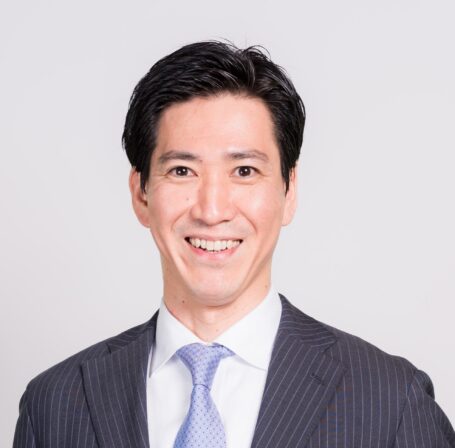
Sophie Scott starts by framing the market in order to explain why she thinks that this is a good time for what they do in the systematic core equity team at Allspring Global Investments.
“As we’ve come into 2026, we’re starting to see the market broadening out, which is great. I think that’s been a narrative that we thought might come a little bit earlier last year. Of course, we can’t talk about the market without talking about the current volatility that we’re seeing with the conflict in the Middle East,” she says.
Another theme that’s been with us for some time, which has also had an impact on different sectors, is of course AI.
“While we believe that the era of ‘buy anything and everything AI’ has somewhat come to an end, we do think it’s a structural theme and it’s here to stay. Investors are, however, much more selective now where they’re choosing to allocate their money. With that in mind, we think that this kind of market environment, while volatile, is conducive for active managers and very supportive for systematic managers,” she says and adds that as a systematic manager, they’re able to assess the entire breadth of the market.
“Our alpha model allows us to cast a wide net and really get into the corners of the universe to identify those winners and losers,” she says and refers to the Global Equity Enhanced Income Fund, which was launched in 2020.
“The key objective of the fund is to deliver an enhanced income of 6 per cent per annum with long-term capital growth in line with the MSCI ACWI Index,” she says and explains that they focus on income, capital growth and balance.
“We think that income is a perennial theme, but we think it is particularly interesting right now because of the volatility that we’re seeing in the market. Over time, income is the most consistent component of total returns. It’s provided some two per cent per year over the last 25 years and with a volatility of just one per cent. So, our belief is that if you can amplify that proportion of income as a part of your total return, we believe that it should be able to deliver a more consistent and stable outcome for our investors,” she says.
Asked if this should be seen as a more defensive investment, Sophie Scott says that while the income component adds to the stability this is different to the typical equity income fund.
“When you think of equity income, you think of that very defensive profile, perhaps underweight low dividend paying regions and sectors, so underweight tech, underweight the U.S. A more value-oriented strategy. We try to deliver more of a core portfolio, which means that we manage our sector, country and region exposures to plus or minus 5 per cent relative to the benchmark. We also target a beta of one to the benchmark as well. So, within our equity portfolio, it’s much more benchmark-like in its construction. Since inception, we’ve outperformed in four out of five calendar years and delivered 100 basis points in excess return whilst being able to deliver that 6 per cent per annum in distribution yield,” she says.
Asked to explain the secret sauce, Sophie Scott says that the fund has two key components.
“We have our high yielding global equity portfolio, and then we have an actively managed options overlay. What we’re looking to do is generate the 6 per cent income from the dividends from the equity portfolio, and then by selling call options on indices to collect those premiums to further enhance that income. Broadly speaking we seek to deliver around 2/3 of the income from the equity portfolio, and then around 1/3 from the options portfolio.”
When talking about the typical questions she gets when discussing with clients, Sophie Scott says that one of the most common relates to the options overlay.
“I think not every investor is fully comfortable, perhaps, with using options and having options within a broader strategy. We therefore tend to have lots of conversations on that aspect and the goal there is to give them confidence that it’s a very transparent, quite simple approach that we’re using when it comes to using the options. We’re only writing on indices, so we’re preserving the stock-specific alpha in the portfolio, and it’s done in a very risk-controlled manner. We only look to generate the income that we need to meet that 6 per cent target,” she says and adds that another question they get relates more to their overall approach as a quant manager.
“I like to say that we’re not your typical quant in that we don’t manage portfolios that have hundreds of thousands of stocks in them. The reason we’re able to do that is that we blend our quantitative models with fundamental validation. What that means is that our model allows us to assess the broad universe and then the stocks that are suggested for inclusion, i.e. the highest ranked stocks, will be reviewed by our portfolio managers. There are two objectives here. First, we’re looking to verify the information from the alpha model and second, we’re looking to incorporate information that’s difficult to measure or quantify. For example, our model’s not going to know if the CEO of the company we just invested in got fired yesterday, or if there’s a huge natural disaster and an insurance company is potentially subject to a large liability. We therefore have this additional fundamental validation layer to help incorporate all available information and improve our decision-making power. That means that we end up with portfolios that are high conviction and more concentrated than your typical quant. Our portfolio managers really know what they are holding because this portfolio in general is between 60 and 80 stocks,” she says.
Asked to explain what a challenging market for the strategy would be, Sophie Scott says that there are definitely better markets for us and markets that are more challenging. “One example of a year that was a bit challenging for us was the calendar year 2023. It was the recovery year after the very challenging 2022, and growth performed very strongly. While we try to balance our factor exposures and try and mitigate those style swings, we are an income strategy so this can be a headwind. Strongly rising markets can also be a challenge for our options overlay, however we construct our options portfolio in such a way where we try and mitigate that risk which we saw last year. This was another strong year for equities, but our options actually added 80 basis points over the year. Finally, our approach is grounded in fundamentals and identifying companies with attractive fundamentals. If we’re in a market environment whereby investors are not rewarding fundamentals, that could also pose somewhat of a challenge,” she says.