Bridging the information asymmetry with trust

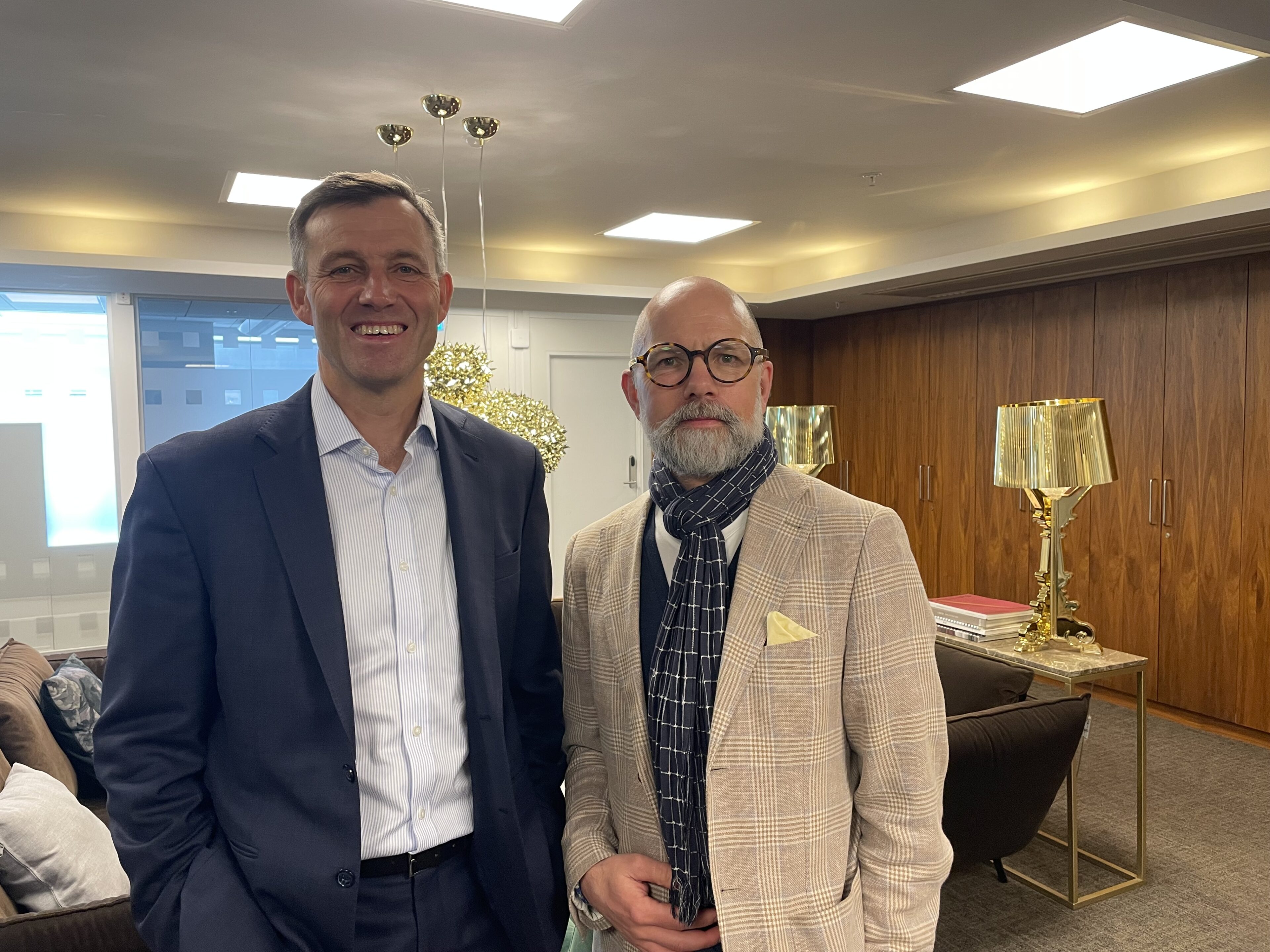
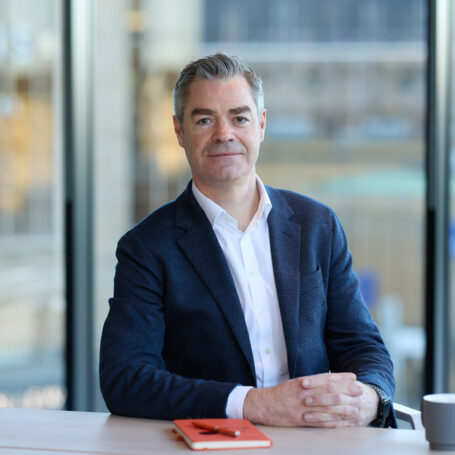
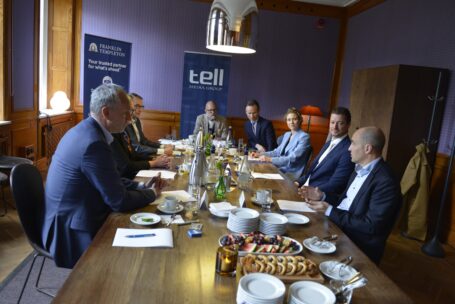
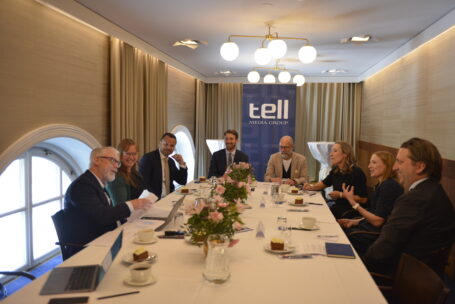
During a visit in Stockholm in mid-April, David Neal, the CEO of IFM Investors sat down with Tell Media Group for a longer interview that among other things covered the unique governance structure of IFM Investors, the long-term secular investment dynamics of infrastructure and why asset owners should put more emphasis on trust when selecting external partners.
START

David Neal, the CEO of IFM Investors since March 2020, has a solid institutional investment background. He spent some 15 years at Willis Towers Watson, first in the UK and then in Australia where he established and led the firm’s investment consulting business. As head of investment consulting at Willis Towers Watson Australia, he led the team providing advisory services to the Future Fund when it was established in 2006. He went on to join the Future Fund and as its first CIO he established the investment team and built and designed the fund’s investment model before taking on the CEO role in 2014.

“We’re very much in the trust business,” David Neal says in an interview during a visit to Stockholm in mid-April. He mentions the Middle East as an example of what he means.

“I had relationships there through my Future Fund days so I kind of knew some of the senior people at some of the funds, but as an organisation, we’ve not really been there in a concerted effort and that’s what you need to do in a new market. People need to see you, they need to see that you’re committed to it, you need to turn up, and you need to be building awareness. Clients like to understand the history, they like to understand who you are and your background and why they should do business with you,” he explains.

He adds that building trust is something that takes time – and sometimes even that isn’t enough. What you’re offering must also be requested by investors and that might be a year from now, or even further away.

“When I was working at the Future Fund, I had many conversations with asset managers who couldn’t understand why they weren’t getting any money. I tried to explain that they were great, but that we already had a portfolio of good managers. You’re not the only great manager in the world so you need to keep showing up and be there when the need arises for a client to allocate some money. So yes, it takes time and patience,” he says.

David Neal says that one of the things he really likes about his current position is the long-term thinking of IFM Investors.

“My owners don’t ask me to maximize earnings, and I find that interesting. It took me a little while to get my head around this when I started as the CEO. Our job is to generate fabulous returns over the long-term, because over half of our money is their money. We of course must run a sustainable business, which supports us to hire great people and invest in ourselves and so that we can have a strong global presence. We can build everything you need to be a great long-term manager and to sustain great returns – but that’s the order of things. The mission is to generate great returns, so we must generate earnings to sustain that. In a typical commercial organisation, it’s the other way around. Their job is to make money for their shareholders and the way they try to do that is by generating returns,” he says. He adds that their model leads you to make decisions slightly differently.

“There may be things we could do that would generate wonderful profits, but if it might endanger the generation of great returns long-term, we won’t do that. That’s not our mission,” he says.

David Neal says that another thing that stands out from many other firms is its governance structure.

“Our board of directors has no owner representatives on it at all. The constitution specifically says if you are an employee, a director or a consultant of one of the owners, you can’t be a director. I think this was very far-sighted when our owners created us some 30 years ago. It means we have a professional board that’s there to run a global asset management business. With individual owners on the board we could get pulled in different directions by the owners’ very specific investment interests. This keeps it much more strategic and it’s worked fabulously,” he says.

Asked about the current trend of consolidation where recent deals seem to suggest that even fairly large asset managers are too small on their own, David Neal says that they want to be great rather than big. He adds that they of course need to be big enough.

“That takes you into the question about what’s big enough, and big enough is very contextual. It depends on what you’re trying to do and what your mission is, but we’re certainly not aiming to be big for the sake of being big. For us it comes back to the fact that it’s not about generating more earnings – it’s about generating great returns. When your owners have so much money invested with you, the return we can make for them through doing a good job or a bad job, will outweigh the change in the dividend that I could pay as a result,” he says.

He continues: “Yes, we need to be big enough. There are certain things where you need scale. Infrastructure investing does require a certain amount of scale. Fortunately, we have that scale. We’ve got some 150 infrastructure professionals spread across dozens of offices around the world. You need that scale, not just for investing, but also for relationships with governments. I do think you can take your thirst for growth too far if it means that you start taking on investors that have slightly different interests, slightly different needs. That’s the external perspective, but there’s also an internal perspective and that’s more abut culture and the reason why people show up for work every day. We’re a very strong mission-led organization and I want people to come in each day and to say we are here for people saving for dignified retirement. We’re not making money for shareholders – we’re making money for the people we walk past in the street. If you suddenly decide that you’re all things to all people, then that you start to dilute that,” he says.

David Neal explains that they have done one meaningful acquisition and that was last year when they bought ISPT, an Australian real estate business.

“This was a very specific case because ISPT was owned by the same people that we’re owned by. It was two vehicles that were set up at much the same time – one to focus on infrastructure and one to focus on real estate. Even if there’s a very strong alignment and a very strong sense of shared purpose, there were still some differences so there’s lots of work to make sure that the business is integrated successfully. And that’s about as simple as it could get. They’re all in Australia. They come from the same heritage, owned by the same people. It’s about as simple as it can get, but it still takes a lot of work.”

Taking a leap backwards and asking David Neal to highlight some of the key moments in the industry from when he joined the Future Fund some 20 years ago, he says that in some ways the asset owner industry doesn’t feel like it’s actually evolved that much but that the market around us has probably changed quite a lot.

“What do I mean by that? What I saw was the opportunity, but I felt that governance was getting in the way of the best way of running large pools of long-term money. Even with the best of intentions, governance was getting in the way. It could be confusing conservative decision-making with conservative investing and that can be counterproductive. It means that boards are deciding on strategic asset allocations and then adding checks around the strategic asset allocations and diversifying within each bucket to the nth degree. The result is that you have a portfolio that’s going to look a lot like that strategic asset allocation, but they completely lost sight of the ultimate mission, which is probably CPI plus 5 and not a 70/30 portfolio. It means that you end up hiring huge teams of people to incredibly carefully manage the risk relative to 70/30 and very little attention is paid to the risk of mismatch between 70-30 and CPI plus 5, which is enormous. Today there is a discussion and a realisation that we could be doing things differently and better. We need to allocate risks relative to the mission. We need to understand what those risks are rather than just kind of outsource them. I think there is a better appreciation of that, but I’m not sure that we’ve moved a lot when it comes to the governance and the processes. We still have organizations in silos managing to a tracking error and struggling to deal with anything that isn’t inside the box that they aren’t responsible for and that, I think, constrains investment outcomes,” he says.

Asked if this comes down to career risk consideration, David Neal says that’s part of it, but that it starts at the governance level.

“It starts with the courage and sophistication of boards. Rather than having a strategic asset allocation and measuring the team against that, it would be refreshing to see a board asking the team to build the best portfolio to deliver against CPI plus 5 and then rather than measure to assess the team against that. That means, actively trying to understand why you’ve made the decisions that you’ve made, why is that the portfolio you’ve built, and what are you expecting to happen? Then we’ll see whether that is what happens. That means that you free the management team up to express their investment philosophy and the research they’ve done relative to the mission rather than this sort of artificial risk metric. It’s much more complicated and it puts much more demands on the governing body. That’s probably why not many have tried to do it. At the Future Fund, I was just in this fabulous opportunity where we had a high-quality board, had no legacy, so they had no existing process that you had to change. We also had high-quality people who had been successful, so they had a certain level of confidence. They were prepared to think about how you could do it differently,” he says.

Commenting on the current trends among asset owners, David Neal says that the shift towards internalization is an obvious one as well as a focus on building strategic partnerships.

“I think there’s been a general feeling among asset owners that external managers are expensive, not very trustworthy and that they could do most of the asset management internally at a lower cost. I’m not going to call peak internalization, but it certainly feels as though that the trend has slowed, and I think there’s been a realisation that it might be both harder and riskier than they thought. We’re certainly seeing some funds backpedalling from that. The shift now is more towards finding people that they can trust and build strategic partnerships, which will start to eat into the internalization trend. What does that mean for us? We’re good at what we do in each of the asset classes, and we need to be working in a much more coherent way with our clients to join all up. We need to understand their problem and what they’re trying to solve and then understand if we can help solve that problem. We’ve got to raise the conversation and use our expertise to support at that higher level, rather than just say that we can add alpha of X in asset class Y. That’s a different set of skills for most asset managers,” he says.

Asked if this means that you need the full breath of capabilities to be a trusted strategic partner, David Neal says no.

“You do need some breadth, but you don’t need to be executing in equity markets to be able to understand the nature of listed markets. One of the key challenges for asset owners is how to bring the best of public and private together. How do you integrate those two things, because they’ve never really been successfully integrated. They offer different characteristics and different exposures. If you’re trying to solve for inflation, there’s some public markets which are good but have their downsides and there’s some private markets that are good but have their downsides. Bringing them together in an integrated way is a very powerful way of solving that inflation problem. Asset owners aren’t set up to do that very well because of the governance issues we’ve talked about earlier. There’s no reason why we can’t do that. We don’t have to be able to execute on commodity futures to understand what commodity futures are so we can bring that expertise and insight alongside our infrastructure portfolio and say – if you combine inflation linked bonds, gold, commodity futures, infrastructure and real estate in this sort of way and manage it in this sort of way and perhaps put some overlays on to remove those sorts of risks then you have a portfolio that’s resilient against inflation. Those are the sorts of conversations we need to have with asset owners because their problem isn’t infrastructure or commodities. The problem is inflation,” he explains.

In trying to frame where we are today with regards to some of the most obvious opportunities and challenges that we’re facing, David Neal says that the obvious opportunity is the capital needs that governments have.

“In the infrastructure space alone, there is this enormous capital need for the energy transition – and that narrative has been strengthened by an energy security narrative and now also defence. Governments are staring at this very long-term, multi-decade capital deployment problem and then they’re looking at their debt to GDP and understand that this is not looking very good. The only way that gets solved is through private capital being deployed. It just won’t happen otherwise, and I think we’d all agree that it must happen. From the investor’s perspective, obviously that creates opportunities. That’s one reason why allocations to infrastructure around the world are rising because it’s going to take 30 or 40 years to build all the stuff that must be built. That’s a wonderful long-term secular investment dynamic to feed into. There’ll be cycles within that, of course, and you need to be careful. You can’t just throw money at it and assume that the cycle will see you through. There’s still investment discipline required and you can lose money if you’re not looking at it the right way. One challenge is that governments haven’t figured out how to build this relationship with private capital in a way that works for both groups,” he says.

He adds that the equation to solve is that governments need the money and investors need a return on investment that’s high enough.

“We think that one way to solve for the risk sharing equation is to highlight that pension capital is different from generic private capital. What’s pension capital? Pension capital is your voters. It’s your normal average person walking down the street that’s got a stake in this. We did some research in an Australian context, but there’s no reason why this wouldn’t be global, which showed that the users of things like toll roads were much happier paying a toll if they understood that it was owned by their pension fund or someone else’s pension fund as opposed to generic private equity. We think that’s a very important and powerful narrative,” he says.

Asked if there are questions that he wished he got more often, David Neal highlight trust and says that it’s a word that’s used a lot but that that’s not enough depth behind it.

“I don’t think buyer behaviour is sufficiently influenced by it, and the reason is that it’s difficult. It’s very difficult to put basis points on it and as humans we’re always drawn to something that’s got a number on it as opposed to something a bit more conceptual. You know that it’s valuable, but you can’t put a number on it. I struggle to understand why some of the organisations that have led asset owners into some of those assets that have gone really badly keep getting money. Why do they continue to be trusted by investors? When I was working at the Future Fund, we tried to build deep trusting relationships with organizations, but we also moved away from organizations where we didn’t have the same trust. The reason why trust is so important is that there is an asymmetry of information in our business. As an investment manager, we’re not able to share all the information that we sit on about the investments that we’re in and the actions we’re taking to improve them and the money we’re spending and the returns we’re trying to generate and why we’re trying to generate them. There’s this massive asymmetry that must be bridged by trust. We work very hard on that, and it frustrates me that there isn’t enough attention paid to it,” he concludes.

David Neal, the CEO of IFM Investors since March 2020, has a solid institutional investment background. He spent some 15 years at Willis Towers Watson, first in the UK and then in Australia where he established and led the firm’s investment consulting business. As head of investment consulting at Willis Towers Watson Australia, he led the team providing advisory services to the Future Fund when it was established in 2006. He went on to join the Future Fund and as its first CIO he established the investment team and built and designed the fund’s investment model before taking on the
The full article is only available to subscribers

If you’re new to Tell Media Group, create an account first.

Read more about our memberships