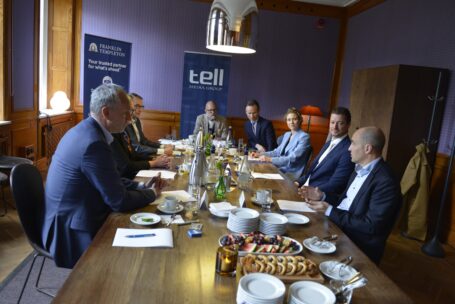
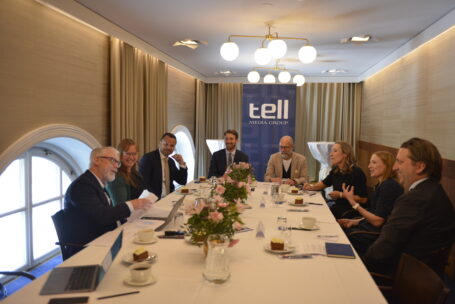
Tell Media Group introduced the Nordic Fund Selection Awards in 2010 in an effort to highlight the importance of the fund selection profession and to create a platform for benchmarking and for channelling feedback from fund companies to Nordic selectors. Coinciding with the event, a supplement is published outlining both the rankings of the teams as well as insights gathered from the top three teams in each country.
As we prepare for this year’s event (hosted in Stockholm on November 19) we did a deep dive into the supplements from the last ten years to find out how the fund selection profession has evolved over time. What we found was that Nordic fund selectors have dramatically broadened their approach. Manager selection teams in the region moved sustainability into the mainstream, grappled with fee pressures by weighing internal solutions, refined their stance on active versus passive investing and raised their expectations of asset managers and sales teams – all while blending quantitative tools with traditional qualitative due diligence.
Ten years ago, fund selection teams already prided themselves on rigorous qualitative research and long-term thinking, but their focus was narrower – past performance and face-to-face judgment often dominated discussions. Over the last decade, however, new forces have reshaped priorities and processes. Sustainability has gone from a niche concern to a central pillar in manager selection, cost pressures have prompted some investors to internalise mandates and embrace passive strategies where appropriate and data-driven analysis now complements the old-fashioned “gut feel” in due diligence.
Sustainability
One of the most striking shifts has been the integration of ESG (environmental, social and governance) considerations into the selection process. By 2016, ESG was no longer optional – it had gained additional momentum over the last year. In fact, Tell Media Group updated the survey methodology for the Nordic Fund Selection Awards that year to explicitly include how well each team integrates ESG in its process. This formal change reflected an industry reality: Nordic asset owners and selectors were increasingly demanding assurance that external managers invest responsibly. Early on, the emphasis might have been on excluding unethical investments, but the focus quickly evolved. Selectors shifted from simple exclusion to deeper engagement with sustainability issues, aiming to identify managers who can deliver long-term performance aligned with responsible practices. By 2019, several selection heads described ESG as a necessity and an area that “constantly evolves and forces selectors…to constantly be on the forefront”, underscoring that keeping up with ESG developments had become critical.
This evolution continued into the 2020s. Regulation amplified the ESG drive. The introduction of the EU Sustainable Finance Disclosure Regulation (SFDR) in 2021 forced selectors to navigate new complexities in categorising funds by sustainability. As one award-winning selector noted, SFDR’s Article 8 and 9 classifications created grey areas – with some managers self-certifying as “sustainable” and others being more conservative – which meant fund selectors had to spend “a lot of time on documentation and reporting” while trying not to let regulatory box-checking obscure real ESG quality.
By 2022, several Nordic institutional investors had joined global initiatives like the Net-Zero Asset Owner Alliance. Their fund selection heads highlighted the challenge of measuring which external managers are truly on track to meet net-zero commitments, calling it both difficult and vitally important. In practice, Nordic selectors began demanding more granular sustainability data from asset managers and embedding climate considerations explicitly in their mandates. By 2023 and 2024, climate change and carbon transition risk ranked among the top priorities – “addressing climate change continues to be a top priority” going into 2024, one Swedish pension team reported, mirroring the region’s sharpening focus on tangible environmental outcomes. Many teams, such as those at leading pension funds, have even added dedicated sustainability analysts to their selection teams in recent years to ensure that ESG analysis is deeply integrated into every manager review.
Cost pressure and internalisation
“Big cost cuttings have…led us to cancel a large number of mandates with external managers,” admitted one Swedish pension fund’s selection chief in 2021. This blunt statement captures another major trend: fee pressures have forced Nordic investors to scrutinise how much they rely on external managers and explore doing more in-house. In the years of low interest rates and moderate returns, cost efficiency became paramount, pushing institutions to ask whether they could manage some strategies internally or consolidate mandates. In one case, Sweden’s AP2 fund significantly trimmed its roster of external managers purely to save costs. Others took a more strategic approach: as early as 2017, AP3 (another Swedish fund) decided to bring part of its risk premia strategy in-house, hiring quantitative experts so the selection team itself could construct and manage that portfolio rather than paying external providers. These moves illustrate how internalisation of certain strategies – especially where scale and expertise allow – became a tool to improve control and cut expenses.
That said, Nordic fund buyers have balanced internal and external approaches rather than simply dropping all external mandates. In fact, some selection heads openly reflected on the trade-offs between in-house management and external managers. “Using external managers can be more efficient than building internal capabilities for every investment area,” noted one Swedish insurance company’s selection lead in 2024. External managers offer breadth, specialised skill and easy replacement if needed – letting investors access niche asset classes or top talent globally. But, as he cautioned, relying on outside firms brings downsides: higher fees than managing money internally, less direct control day-to-day, the burden of monitoring multiple providers and even reputational risk if an external manager underperforms or behaves unethically. The story of the past decade is that Nordic institutions increasingly tried to get the best of both worlds: insource where they have scale or unique perspective and outsource where it adds diversification or expertise. For example, a large Danish pension executed ten EU-wide manager searches in two years, partly to sharpen their internal skills and refine tender processes – but they still rely on external managers for all their assets and simply focus on managing them better.
In Finland, blended models are common: one big pension organisation in 2023 had about 70 per cent of its EUR 64 billion portfolio invested via external funds, while retaining internal effort for core portfolios. The calculus is nuanced: internal management avoids external fees, yet external managers can deliver global reach and specialist alpha. Over time, Nordic selectors have become more surgical in choosing which mandates to keep external, often citing cost as a key factor.
Active vs passive rebalancing
Alongside internalisation, the Nordics witnessed a pragmatic shift in views on active versus passive management. A decade ago, actively managed funds were the default for most institutions’ external mandates; passive indexing was used selectively, perhaps for efficiency in efficient markets. However, after years of modest alpha in certain asset classes and underperformance by many active managers (especially in large-cap equities), attitudes have become more balanced. As one Swedish wealth manager observed in 2025, “There has been a headwind for active managers… we will pay close attention to the relationship between active and passive strategies” in our portfolio. His team plans to concentrate active management where it can add real value and lean on passive solutions for cost-effective broad exposure. This encapsulates the region’s emerging consensus: active managers must justify their fees and will be used mainly in less efficient or high-alpha potential areas, while passive funds are standard for core beta exposures or tight budgets.
Notably, Nordic selectors never completely abandoned active management – indeed, many explicitly cherish finding emerging manager talent who can outperform in the long run. But the push for “consistency in line with process” is now a mantra. They have grown wary of active managers who rely too much on market luck or “good stories” that might not persist. Several selection teams turned to quantitative factor analysis to demystify performance – for instance, Nykredit’s team in 2016 had already started running factor analytics on all their managers to separate “lucky” performance from true skill. Similarly, a Finnish team emphasised not being “carried away by a good story” and digging deeper into whether results are repeatable.
In practice, this means even active mandates have had to evolve. Successful external managers in the Nordics are expected to provide clarity on their alpha sources versus market beta, and many selection teams use data tools to verify that a manager’s performance aligns with their claimed style.
By the mid-2020s, some selectors were even exploring AI and advanced analytics to further refine manager assessment – “looking into how AI can support our process”, a leading Swedish bank’s selection head said in 2023, particularly to improve sustainability assessments. All these developments illustrate a blending of qualitative and quantitative evaluation: human judgment remains vital, but it is now augmented by data-driven insight to ensure that active managers truly earn their place in the portfolio.
Emphasis on team quality and culture
Throughout these changes, Nordic selectors have upheld that asset management is a “people business.” Early in the period, teams already highlighted qualitative factors such as stability and culture. In 2016, for example, multiple winners stressed a “continuous focus on qualitative factors” – the expertise, integrity and cohesion of a fund manager’s team – as key selection criteria. Over time, this focus only grew. By 2019, one prominent selector explicitly pointed out that corporate culture at an asset manager can make or break a mandate. A “bad culture likely will lead to high turnover” of key staff, he noted, and if a manager’s values don’t align with the investor’s, “we could opt not to work with [them]”.
Trust is paramount: “Ultimately, our business is about trust and if we don’t trust the people… then it’s not a partnership worth pursuing,” the same selector said. Nordic teams therefore have institutionalised ways to diligence “soft” factors. On-site visits to meet portfolio managers in their environment became standard; sending multiple team members to observe manager offices is a common practice to “get a sense of the corporate culture”.
Interestingly, diversity and team composition have also come under the microscope. Selection teams have debated whether factors like gender diversity at an external manager should influence selection. At least one team was asked in 2018 if they evaluate gender diversity; they responded that while it isn’t an explicit criterion, they primarily look for “a highly competitive and skilled investment team” regardless. Still, raising the question itself shows how selectors are increasingly aware of broader team quality factors beyond pure performance.
At heart, Nordic fund selection has remained relationship-driven and qualitative – they still consider meeting people and judging character as irreplaceable components of due diligence. But the mindset expanded: in addition to scrutinising portfolio strategy, they probe the stability and culture behind that strategy. They ask how an asset manager retains talent, how decisions are made and how the organisation supports its best investors. These insights help Nordic selectors favour managers with coherent, sustainable teams and avoid ones that might fall apart or deviate in tough times.
Raising the bar for asset managers and sales teams
With growing sophistication on the buy-side, the expectations placed on asset managers and their sales representatives have become tougher. From 2016 onward, interviews conducted in relation to the Nordic Fund Selection Awards captured a recurring theme: fund selectors often advise external sales teams on the “do’s and don’ts” if they want a shot at winning mandates. The basics – “Be prepared, be specific and be professional” – were always there. But what “prepared” and “professional” means has evolved. Relevance is key: Nordic selectors now strongly prefer targeted pitches that align with what they actually need at the time. Selection teams routinely publish or communicate which mandates they’re working on, and they expect asset managers to take note. By 2023, one leading selector emphasised that “aligning sales efforts with our search agenda is always appreciated” and that generic product pushes are not.
Furthermore, information must be timely and accurate. Asset managers are expected to keep databases current and be quick in sharing updates. “It’s very important that manager data are correct and updated in databases,” stressed one Danish pension fund in 2023, highlighting that selectors now rely on digital platforms to screen managers. Nothing frustrates a modern fund selector more than stale information or discovering that a fund’s facts are out of date. Similarly, any changes to a strategy must be communicated promptly.
Many Nordic selectors also insist on substance over marketing gloss. They often request to meet portfolio managers or analysts rather than just relationship managers, to engage in “constructive discussion about the strategy”. An open, frank dialogue is valued – one team even says, “don’t turn it into a Trump versus Hillary campaign,” advising salespeople not to badmouth competitors but rather focus on what their own fund does best. And with the pandemic-era normalisation of remote interactions, selectors have embraced efficiency: a quick introductory email or video call is often preferred as a first step rather than an immediate in-person meeting. For example, Denmark’s LD Pensions noted in 2021 that virtual calls proved effective, and they now typically ask for a short video introduction before committing to an on-site meeting.
In summary, the bar has been raised for asset managers hoping to win Nordic mandates. They must deliver clear value propositions, demonstrate competitive edge and tailor their outreach to each investor’s needs. The old spray-and-pray approach in sales is no longer welcome; instead, building trust through relevant insights and transparency is what opens doors.
Quant meets qual
Underpinning many of these trends is the convergence of qualitative and quantitative techniques in selection. Nordic teams remain highly qualitative – interviewing managers, judging culture, forming forward-looking opinions – but they increasingly augment this with data. Over the decade, quantitative screening and analysis tools moved from periphery to a regular part of the process.
For example, by 2021 the selection team at LD Pensions had integrated factor exposure analysis into manager monitoring and selection decisions, uploading holdings data quarterly to “check whether factor exposures…are drifting” and running regressions to quantify each manager’s true alpha versus factor beta. Such practices show how even qualitative shops use hard data to validate or challenge a manager’s narrative.
The result of a decade of evolution is a more multifaceted, disciplined and forward-looking Nordic fund selection process. Selection teams today weigh a broader set of criteria than before: not just performance and process, but ESG credibility, fee efficiency, team culture and the manager’s adaptability to future conditions. They have become more proactive and strategic – some develop internal databases to track all meetings and research and regularly refine their own methods to avoid complacency. In the words of a Norwegian selector, continuous improvement is vital: “we endeavour to continuously make enhancements” to our process. That sentiment captures the prevailing attitude in the Nordic fund selection community: evolving to meet new challenges is part of their DNA. From the “year of ESG integration” in 2016 to an era of net-zero commitments and AI tools by the mid-2020s, Nordic fund selectors have shown a remarkable ability to adapt. They remain independent and analytical, focused on long-term, sustainable outperformance for their beneficiaries. And as they navigate rising demands – whether around climate impact or cost control – they have not lost sight of the fundamentals of good manager selection: broad knowledge, patience and the ability to find true skill amid market noise. If the past decade is any guide, they will continue raising their game, ensuring that excellence in fund selection remains a Nordic hallmark even as the industry keeps changing.
Tell Media Group introduced the Nordic Fund Selection Awards in 2010 in an effort to highlight the importance of the fund selection profession and to create a platform for benchmarking and for channelling feedback from fund companies to Nordic selectors. Coinciding with the event, a supplement is published outlining both the rankings of the teams as well as insights gathered from the top three teams in each country. As we prepare for this year’s event (hosted in Stockholm on November 19) we did a deep dive into the supplements from the last ten years to find out how the fundIf you’re new to Tell Media Group, create an account first.
Read more about our memberships