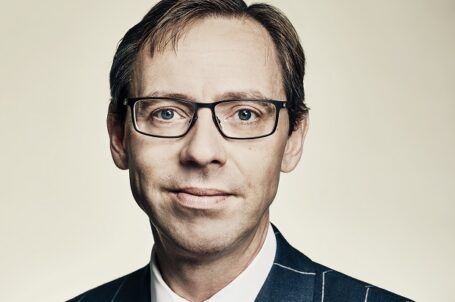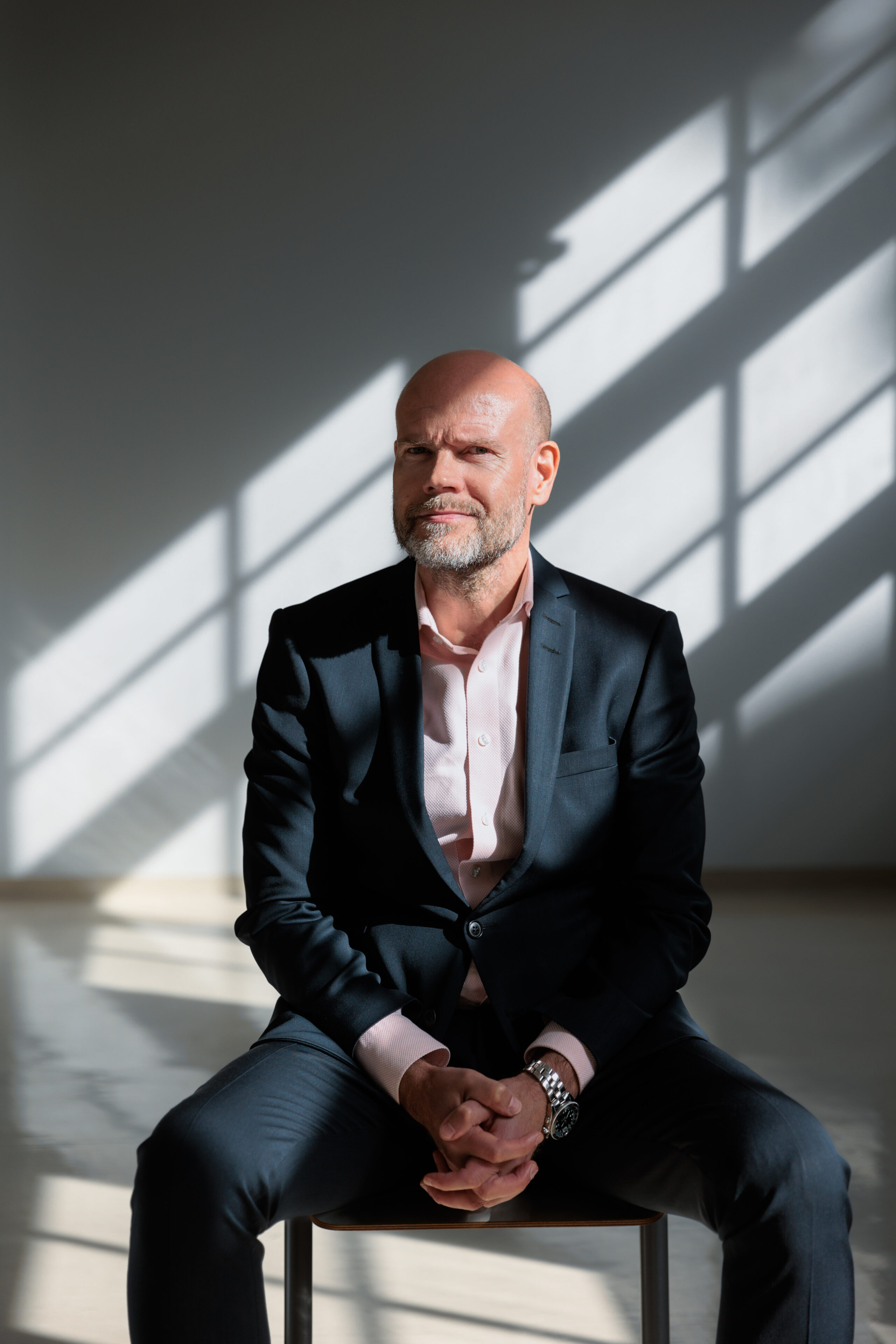
The last time Tell Media Group met with Christian Backholm was back in 2018 and at the time he had held the role as CIO of Åbo Akademi University Foundation (Stiftelsen för Åbo Akademi) for some three years. He started his career at Gyllenberg, then oldest investment bank in Finland, and continued at SEB after it acquired the Gyllenberg banking business in 1997.
With his background as a portfolio manager for more than 20 years, picking individual stocks was also how the foundation’s equity portfolio was managed up until recently. At the time of the old interview, he said: “I’m a bottom-up investor so I don’t trade or do ETFs. I do case-by-case fundamental analysis and stock-picking with a long-term investment horizon.”
That strategy changed in 2024, and the portfolio has transitioned from focusing on bottom-up stock picking in Finland, and to some extent Sweden, to being a global indexed equity portfolio. It has also reconsidered its large real estate exposure.
“Having worked as a fund manager I very much appreciated coming to the foundation because it’s long-term for real. As a portfolio manager for a fund, the time horizon is quite short. There’s usually quite a bit of pressure after one or two bad years,” he says. Asked to reflect on the interview from 2018 and their investment strategy at the time, Christian Backholm says that he sees the world with slightly different eyes today.
“At the beginning of 2023, the foundation had an investment advisory committee for the first time, and the board of directors commissioned the investment committee to review the investment strategy and to come up with suggestions,” he says. The result was a significant change – not least for the equity portfolio.
“They thought that the concentration risks and volatility were too high because of our focus on Finland and partly Sweden. They also highlighted that the real estate exposure was too big. We worked on a new investment policy with an external consultant throughout 2023 and the board of directors approved it at the beginning of 2024,” he says.
The result was that direct investments in local equities should decrease from 100 per cent to 20 per cent and that global index funds should increase from zero to 80 per cent over a four-year period.
“I’ve been a dedicated stock picker for a long time, and I must admit that it’s become increasingly challenging,” he says and admits that this is the reason for his change of mind.
“There are very few active managers who are able to beat the benchmark over a longer period of time,” he says.
The current allocation is 60 per cent equities, 10 per cent fixed income and 30 per cent real estate. The equity portfolio is split into 25 per cent US, 35 per cent Europe and 40 per cent Nordic equities where the Nordic sleave will be reduced to 20 per cent during the year. He says that they’ve managed to sell a large portion of the real estate, but it’s still too large.
“The real estate market is still challenging,” he says. He adds that the larger pension companies in Finland have barely started reducing their real estate allocation, which is expected following updated regulation.
Asked if they act on shorter market volatility events, such as Covid, Russia’s invasion of Ukraine or Liberation Day, Christian Backholm says that it has varied.
“During Covid, we were in the process of raising the equity risk. We had a fairly significant fixed income allocation at the time and when the crash came, we were big buyers of equities. It was a very successful year, and it was probably among the best investments I’ve made in my thirty-year history as a portfolio manager,” he says. He says that the events related to Russia’s invasion of Ukraine was different.
“At the time we had a lot of Nokian Tyres in the portfolio, and they had a substantial production in Russia. We got out quickly, but the stock was still down some 45 per cent,” he says. He adds that they didn’t make any significant adjustment during Liberation Day.
“It’s difficult to make investment decisions on political events such as this one,” he admits, but adds that they have been avoiding US equities over the past year.
“We’ve only bought European funds and that comes down to the political risk, and I’m especially concerned about the dollar. I’m not convinced that we’ve seen the worst yet,” he says.
Turning the discussion to sustainability and asking if he thinks there is such a thing as ESG alpha, Christian Backholm says that his main focus is on the risk management aspects. “I think it’s fair to say that sustainable companies are less risky. As a public benefit foundation that receives a tax exemption, I think we also have an obligation to act sustainably. I do think that it creates more value in the long term and I’m convinced that sustainable companies are not doing worse because they are sustainable. I think that’s enough,” he says.
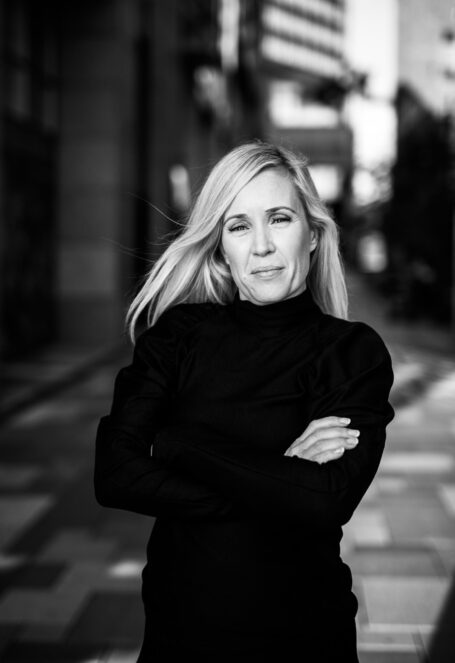
Photo: Linda Svarfvar
The last time Tell Media Group met with Christian Backholm was back in 2018 and at the time he had held the role as CIO of Åbo Akademi University Foundation (Stiftelsen för Åbo Akademi) for some three years. He started his career at Gyllenberg, then oldest investment bank in Finland, and continued at SEB after it acquired the Gyllenberg banking business in 1997.
With his background as a portfolio manager for more than 20 years, picking individual stocks was also how the foundation’s equity portfolio was managed up until recently. At the time of the old interview, he said: “I’m a bottom-up investor so I don’t trade or do ETFs. I do case-by-case fundamental analysis and stock-picking with a long-term investment horizon.”
That strategy changed in 2024, and the portfolio has transitioned from focusing on bottom-up stock picking in Finland, and to some extent Sweden, to being a global indexed equity portfolio. It has also reconsidered its large real estate exposure.
“Having worked as a fund manager I very much appreciated coming to the foundation because it’s long-term for real. As a portfolio manager for a fund, the time horizon is quite short. There’s usually quite a bit of pressure after one or two bad years,” he says. Asked to reflect on the interview from 2018 and their investment strategy at the time, Christian Backholm says that he sees the world with slightly different eyes today.
“At the beginning of 2023, the foundation had an investment advisory committee for the first time, and the board of directors commissioned the investment committee to review the investment strategy and to come up with suggestions,” he says. The result was a significant change – not least for the equity portfolio.
“They thought that the concentration risks and volatility were too high because of our focus on Finland and partly Sweden. They also highlighted that the real estate exposure was too big. We worked on a new investment policy with an external consultant throughout 2023 and the board of directors approved it at the beginning of 2024,” he says.
The result was that direct investments in local equities should decrease from 100 per cent to 20 per cent and that global index funds should increase from zero to 80 per cent over a four-year period.
“I’ve been a dedicated stock picker for a long time, and I must admit that it’s become increasingly challenging,” he says and admits that this is the reason for his change of mind.
“There are very few active managers who are able to beat the benchmark over a longer period of time,” he says.
The current allocation is 60 per cent equities, 10 per cent fixed income and 30 per cent real estate. The equity portfolio is split into 25 per cent US, 35 per cent Europe and 40 per cent Nordic equities where the Nordic sleave will be reduced to 20 per cent during the year. He says that they’ve managed to sell a large portion of the real estate, but it’s still too large.
“The real estate market is still challenging,” he says. He adds that the larger pension companies in Finland have barely started reducing their real estate allocation, which is expected following updated regulation.
Asked if they act on shorter market volatility events, such as Covid, Russia’s invasion of Ukraine or Liberation Day, Christian Backholm says that it has varied.
“During Covid, we were in the process of raising the equity risk. We had a fairly significant fixed income allocation at the time and when the crash came, we were big buyers of equities. It was a very successful year, and it was probably among the best investments I’ve made in my thirty-year history as a portfolio manager,” he says. He says that the events related to Russia’s invasion of Ukraine was different.
“At the time we had a lot of Nokian Tyres in the portfolio, and they had a substantial production in Russia. We got out quickly, but the stock was still down some 45 per cent,” he says. He adds that they didn’t make any significant adjustment during Liberation Day.
“It’s difficult to make investment decisions on political events such as this one,” he admits, but adds that they have been avoiding US equities over the past year.
“We’ve only bought European funds and that comes down to the political risk, and I’m especially concerned about the dollar. I’m not convinced that we’ve seen the worst yet,” he says.
Turning the discussion to sustainability and asking if he thinks there is such a thing as ESG alpha, Christian Backholm says that his main focus is on the risk management aspects. “I think it’s fair to say that sustainable companies are less risky. As a public benefit foundation that receives a tax exemption, I think we also have an obligation to act sustainably. I do think that it creates more value in the long term and I’m convinced that sustainable companies are not doing worse because they are sustainable. I think that’s enough,” he says.
Photo: Linda Svarfvar