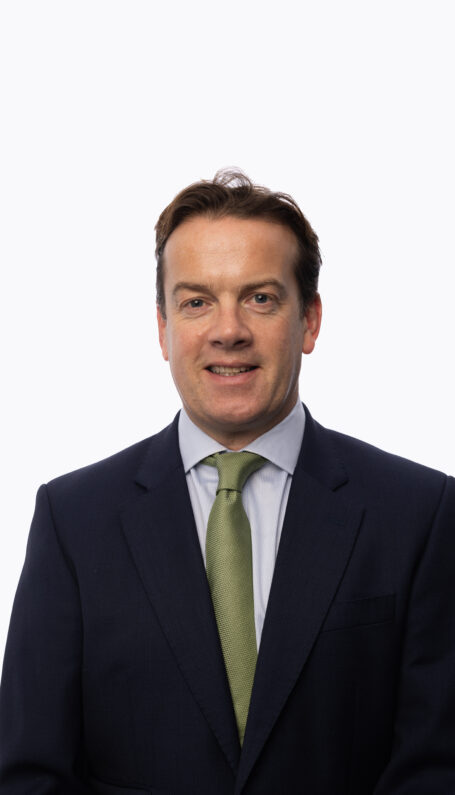
Jens-Christian Stougaard has an extensive background in the financial sector – including nine years at Danish pension fund, PensionDanmark where he was senior vice president responsible for business development, analysis, public affairs and CSR. He has also served as CEO of The Danish Recovery Fund in the aftermath of Covid-19 and has vast experience as a consultant specialising in pensions, retirement systems and pension fund investments.
Sitting down for a conversation about litigation as a tool for fiduciary governance, he says that while the United States has the deepest experience built on nearly a century of securities law precedent and disclosure culture this is increasingly becoming a global phenomenon. Jens-Christian Stougaard says that Nordic pension funds have been particularly prominent in this space with Norway’s Government Pension Fund Global and Sweden’s AP7 being appointed co-lead plaintiffs in securities class actions against Silicon Valley Bank and Signature Bank following their 2023 collapses. He adds that Alecta, Sweden’s largest occupational pension fund, leads the investor action against First Republic Bank.
“If we talk about governance more broadly, you can say that security litigation is sort of a disciplined form of fiduciary governance. It represents a structured escalation when engagement or other related measures prove insufficient in terms of addressing governance failures,” Jens-Christian Stougaard explains. He adds that it needs to be there in the toolbox as something that you can use when your engagement or your voting fails to deliver on the governance improvements that you have expected.
“It is also an efficient tool when you as an investor have suffered loss from corporate malpractice or from corporate fraud,” he says.
Asked about how it works in practice, Jens-Christian Stougaard says that you typically need to be a direct owner of the shares and not an indirect owner via funds.
“In the US it’s the investor with the largest financial stake that’s appointed as the lead plaintiff. So, the investor that has suffered the most harm is the lead plaintiff,” he says. Asked about how you can benefit if you are not the lead plaintiff, Jens-Christian Stougaard explains that in the US you are automatically part of the case if you have owned or purchased securities within a specific period of time.
“You are part of the case unless you choose to opt out. However, when there is a settlement or there’s a ruling by a judge, then you need to submit your claims filing. You need to actively do something in order to recuperate the funds that is yours,” he says.
Jens-Christian Stougaard continues and says that the engagement by asset owners in the US has become more complicated recently. This has led many pension funds to participate in what is described as silent engagements where they basically only listen.
“They are concerned that if they tag along with other investors, it could be seen as collusion or that they would be required to meet extra disclosure requirements. There’s been a lot of talk about that on the equity side. On the credit side, it’s a little bit different because then the dialogue is initiated by the company. But if we stay on the equity side, there’s been a lot of change there in terms of the engagement,” he says.
Asked if he thinks that asset owners hesitate to move ahead with litigations Jens-Christian Stougaard says he’s not seeing that, but that investors want to ensure that they are focusing on the right cases.
“So, you want to undertake a case where you feel that there’s a genuine wrongdoing on the part of the company, whether it is fraud or a gross misrepresentation of where the company is going. But in that situation, pension funds are very much looking to this as part of their fiduciary duty,” he says and adds that there are typically positive spillover effects.
“These governance changes have a ripple effect through the different industries where you see other companies in the same industry adjusting their governance in light of this simply because it becomes now best practice,” he says.
Asked about some of the most common questions he receives from Nordic investors, Jens-Christian Stougaard says that one of the main things for them is what sort of time and resources that are required. He adds that investors should also focus on the link between what they’re doing in the engagement and proxy voting and what is going on in the litigation part. “If we look at what type of governance reforms investors can get through engagement and proxy voting as opposed to the governance reforms that can be obtained through litigation the difference is quite substantial. Investors should understand that this is not a part of the toolbox that should be taken out and used on a daily basis, but it’s a part that needs to be there in order for them to strengthen the value and the effectiveness of their ongoing engagements,” he concludes.
Jens-Christian Stougaard has an extensive background in the financial sector – including nine years at Danish pension fund, PensionDanmark where he was senior vice president responsible for business development, analysis, public affairs and CSR. He has also served as CEO of The Danish Recovery Fund in the aftermath of Covid-19 and has vast experience as a consultant specialising in pensions, retirement systems and pension fund investments.
Sitting down for a conversation about litigation as a tool for fiduciary governance, he says that while the United States has the deepest experience built on nearly a century of securities law precedent and disclosure culture this is increasingly becoming a global phenomenon. Jens-Christian Stougaard says that Nordic pension funds have been particularly prominent in this space with Norway’s Government Pension Fund Global and Sweden’s AP7 being appointed co-lead plaintiffs in securities class actions against Silicon Valley Bank and Signature Bank following their 2023 collapses. He adds that Alecta, Sweden’s largest occupational pension fund, leads the investor action against First Republic Bank.
“If we talk about governance more broadly, you can say that security litigation is sort of a disciplined form of fiduciary governance. It represents a structured escalation when engagement or other related measures prove insufficient in terms of addressing governance failures,” Jens-Christian Stougaard explains. He adds that it needs to be there in the toolbox as something that you can use when your engagement or your voting fails to deliver on the governance improvements that you have expected.
“It is also an efficient tool when you as an investor have suffered loss from corporate malpractice or from corporate fraud,” he says.
Asked about how it works in practice, Jens-Christian Stougaard says that you typically need to be a direct owner of the shares and not an indirect owner via funds.
“In the US it’s the investor with the largest financial stake that’s appointed as the lead plaintiff. So, the investor that has suffered the most harm is the lead plaintiff,” he says. Asked about how you can benefit if you are not the lead plaintiff, Jens-Christian Stougaard explains that in the US you are automatically part of the case if you have owned or purchased securities within a specific period of time.
“You are part of the case unless you choose to opt out. However, when there is a settlement or there’s a ruling by a judge, then you need to submit your claims filing. You need to actively do something in order to recuperate the funds that is yours,” he says.
Jens-Christian Stougaard continues and says that the engagement by asset owners in the US has become more complicated recently. This has led many pension funds to participate in what is described as silent engagements where they basically only listen.
“They are concerned that if they tag along with other investors, it could be seen as collusion or that they would be required to meet extra disclosure requirements. There’s been a lot of talk about that on the equity side. On the credit side, it’s a little bit different because then the dialogue is initiated by the company. But if we stay on the equity side, there’s been a lot of change there in terms of the engagement,” he says.
Asked if he thinks that asset owners hesitate to move ahead with litigations Jens-Christian Stougaard says he’s not seeing that, but that investors want to ensure that they are focusing on the right cases.
“So, you want to undertake a case where you feel that there’s a genuine wrongdoing on the part of the company, whether it is fraud or a gross misrepresentation of where the company is going. But in that situation, pension funds are very much looking to this as part of their fiduciary duty,” he says and adds that there are typically positive spillover effects.
“These governance changes have a ripple effect through the different industries where you see other companies in the same industry adjusting their governance in light of this simply because it becomes now best practice,” he says.
Asked about some of the most common questions he receives from Nordic investors, Jens-Christian Stougaard says that one of the main things for them is what sort of time and resources that are required. He adds that investors should also focus on the link between what they’re doing in the engagement and proxy voting and what is going on in the litigation part. “If we look at what type of governance reforms investors can get through engagement and proxy voting as opposed to the governance reforms that can be obtained through litigation the difference is quite substantial. Investors should understand that this is not a part of the toolbox that should be taken out and used on a daily basis, but it’s a part that needs to be there in order for them to strengthen the value and the effectiveness of their ongoing engagements,” he concludes.