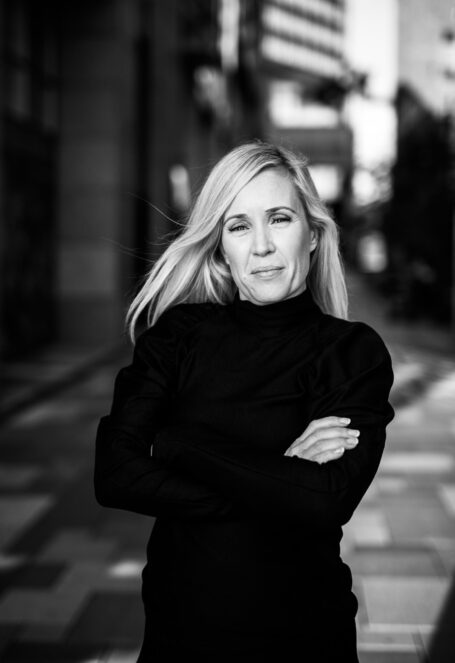
We kick off the interview by discussing the definition of alternative fixed income, terminology that Matthew Freund says has broadened significantly over the past decade.
“When I started in the industry, we just called it bank loans. We didn’t even call it private credit. We were simply lending money to companies in the same way a bank historically would have. Along the way, we’ve used a number of different descriptions — private credit, direct lending, global private finance. But if you take a step back and think about the alternatives classification, it’s a bilateral loan negotiated between an issuer and lender. That’s really it,” he says. He adds that because the category spans a wide range of risk and return profiles, investors need to consider which segments of the market they are most interested in targeting.
When describing Barings’ position in the market, Matthew Freund begins by saying the firm is a majority-owned subsidiary of MassMutual, a U.S. life insurer with more than a century of history.
“We’ve been investing in private, sponsor-backed lending for more than 30 years, so we’ve built a long track record. If I had to highlight what defines us, I would say consistency of process, alignment of interests, and scale,” he says. He adds that the firm’s ownership structure enables it to invest alongside its clients in nearly every transaction.
“When we talk to insurance companies, pension funds and other asset owners, that message of alignment resonates,” he says.
Turning to the opportunity set, Matthew Freund emphasizes the advantage of Barings’ presence across Europe, North America and Asia Pacific.
“Geopolitical risk today is higher than it’s been in recent history. Over the past decade, there have been periods when the US has been the most compelling market for investment, and times when Europe or Asia Pacific have offered better value. As someone based in the US, it’s not lost on me that the geopolitical landscape here is quite fractured and, as a result, more opportunities are emerging outside the US,” he says. He stresses, however, that this balance can shift quickly. And considering that the US represents roughly 50 to 70 per cent of the global sponsor-backed lending universe, he notes that avoiding US exposure can have ramifications for returns.
“I’m not going to claim that’s inherently positive or negative. It’s just something that investors need to think about. In our global strategy, allocations have varied by vintage. In 2014 and 2016, we were more heavily weighted to the US, and that was very clearly by design. In more recent vintages, Europe has played a larger role,” he says.
Matthew Freund explains that Barings’ direct lending strategy aims to deliver an illiquidity premium over the broadly syndicated markets.
“That’s our commitment to investors,” he says. He adds: “Over the last twelve months, we’ve delivered an illiquidity premium of 150 – 200 basis points in the US and 175 – 200 basis points in Europe.” He notes that this differential has contributed to their recent overweight in Europe.
“Right now, Europe looks particularly appealing. But in North America, a tremendous amount of retail capital has come into the market, and if some of that capital starts to flow out, spreads could widen—creating new opportunities for us,” he says.
Asked whether sourcing and research capabilities are essential for success, Matthew Freund agrees.
“You need both scale and discipline to be able to say no. We have more than 100 professionals globally sourcing and underwriting loans, and we close less than 5 per cent of the deals we review,” he says. He adds that not every deal will look compelling, and that capital shouldn’t be deployed simply because it’s available.
“If you look back, 2021 and 2022 offered significant opportunity, supported by a very healthy merger and acquisition environment in the private equity community. 2023 was a different story, with a smaller opportunity set. But if you look at our statistics, you will see consistency in how we deploy and how we underwrite. Going back to 2020, our loan-to-value and leverage metrics globally are largely unchanged,” he says.
On the challenge of matching inflows from investors with the opportunity set, Matthew Freund acknowledges that difficult conversations occasionally arise.
“It’s always a balance. At any given time, there can be more deals than capital or more capital than deals—that’s just the nature of the business. But we would much rather tell our LPs that we are deploying slower than expected than have a conversation two years from now about how capital was deployed into unattractive or overly risky transactions,” he explains.
Asked about the most common questions he receives from prospective investors, Matthew Freund says discussions tend to focus on differentiation, or how Barings’ platform, approach and capabilities compare to other direct lenders.
“Many investors are also thinking about where direct lending fits within their broader strategic allocation,” he says. He adds that questions about whether the asset class is in a bubble are also increasingly common.
“I don’t think we’re in a bubble,” he says. He adds that investors should be cautious about investing with subscale managers and managers without proper alignment, especially with 2026 shaping up to be a year of dispersion. Scale matters, he notes, because it supports diversification, underwriting depth and consistency through cycles. Some estimates peg the number of private credit managers globally at around 1500 — which Matthew Freund says is far more than the industry can likely support over the long term. In his view, the environment ahead will reward managers with the resources and discipline to navigate a more selective opportunity set, as well as those who have strong alignment with their investors.
We kick off the interview by discussing the definition of alternative fixed income, terminology that Matthew Freund says has broadened significantly over the past decade.
“When I started in the industry, we just called it bank loans. We didn’t even call it private credit. We were simply lending money to companies in the same way a bank historically would have. Along the way, we’ve used a number of different descriptions — private credit, direct lending, global private finance. But if you take a step back and think about the alternatives classification, it’s a bilateral loan negotiated between an issuer and lender. That’s really it,” he says. He adds that because the category spans a wide range of risk and return profiles, investors need to consider which segments of the market they are most interested in targeting.
When describing Barings’ position in the market, Matthew Freund begins by saying the firm is a majority-owned subsidiary of MassMutual, a U.S. life insurer with more than a century of history.
“We’ve been investing in private, sponsor-backed lending for more than 30 years, so we’ve built a long track record. If I had to highlight what defines us, I would say consistency of process, alignment of interests, and scale,” he says. He adds that the firm’s ownership structure enables it to invest alongside its clients in nearly every transaction.
“When we talk to insurance companies, pension funds and other asset owners, that message of alignment resonates,” he says.
Turning to the opportunity set, Matthew Freund emphasizes the advantage of Barings’ presence across Europe, North America and Asia Pacific.
“Geopolitical risk today is higher than it’s been in recent history. Over the past decade, there have been periods when the US has been the most compelling market for investment, and times when Europe or Asia Pacific have offered better value. As someone based in the US, it’s not lost on me that the geopolitical landscape here is quite fractured and, as a result, more opportunities are emerging outside the US,” he says. He stresses, however, that this balance can shift quickly. And considering that the US represents roughly 50 to 70 per cent of the global sponsor-backed lending universe, he notes that avoiding US exposure can have ramifications for returns.
“I’m not going to claim that’s inherently positive or negative. It’s just something that investors need to think about. In our global strategy, allocations have varied by vintage. In 2014 and 2016, we were more heavily weighted to the US, and that was very clearly by design. In more recent vintages, Europe has played a larger role,” he says.
Matthew Freund explains that Barings’ direct lending strategy aims to deliver an illiquidity premium over the broadly syndicated markets.
“That’s our commitment to investors,” he says. He adds: “Over the last twelve months, we’ve delivered an illiquidity premium of 150 – 200 basis points in the US and 175 – 200 basis points in Europe.” He notes that this differential has contributed to their recent overweight in Europe.
“Right now, Europe looks particularly appealing. But in North America, a tremendous amount of retail capital has come into the market, and if some of that capital starts to flow out, spreads could widen—creating new opportunities for us,” he says.
Asked whether sourcing and research capabilities are essential for success, Matthew Freund agrees.
“You need both scale and discipline to be able to say no. We have more than 100 professionals globally sourcing and underwriting loans, and we close less than 5 per cent of the deals we review,” he says. He adds that not every deal will look compelling, and that capital shouldn’t be deployed simply because it’s available.
“If you look back, 2021 and 2022 offered significant opportunity, supported by a very healthy merger and acquisition environment in the private equity community. 2023 was a different story, with a smaller opportunity set. But if you look at our statistics, you will see consistency in how we deploy and how we underwrite. Going back to 2020, our loan-to-value and leverage metrics globally are largely unchanged,” he says.
On the challenge of matching inflows from investors with the opportunity set, Matthew Freund acknowledges that difficult conversations occasionally arise.
“It’s always a balance. At any given time, there can be more deals than capital or more capital than deals—that’s just the nature of the business. But we would much rather tell our LPs that we are deploying slower than expected than have a conversation two years from now about how capital was deployed into unattractive or overly risky transactions,” he explains.
Asked about the most common questions he receives from prospective investors, Matthew Freund says discussions tend to focus on differentiation, or how Barings’ platform, approach and capabilities compare to other direct lenders.
“Many investors are also thinking about where direct lending fits within their broader strategic allocation,” he says. He adds that questions about whether the asset class is in a bubble are also increasingly common.
“I don’t think we’re in a bubble,” he says. He adds that investors should be cautious about investing with subscale managers and managers without proper alignment, especially with 2026 shaping up to be a year of dispersion. Scale matters, he notes, because it supports diversification, underwriting depth and consistency through cycles. Some estimates peg the number of private credit managers globally at around 1500 — which Matthew Freund says is far more than the industry can likely support over the long term. In his view, the environment ahead will reward managers with the resources and discipline to navigate a more selective opportunity set, as well as those who have strong alignment with their investors.