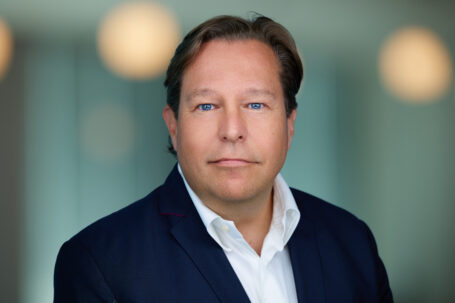
As we kick off the interview, Jim Whittington—a senior portfolio manager and vice president at Dimensional Fund Advisors—says that Dimensional has been having many conversations with institutional investors interested in moving away from traditional indexing and towards a more systematic active approach.
“We hear more and more about the idea of ‘index plus’ or ‘passive plus.’ Different investors approach this differently, but whichever way you come at it, we think it’s a good idea for investors, fund buyers, and institutional investors to think carefully about what their index provider and their index funds are giving them. Just because something has a low headline fee doesn’t mean it’s going to be low cost when you consider all the other elements of implementation,” he says.
Jim Whittington adds that the market is a good starting point, but that one common mistake is that investors put an equal sign between “the market” and “the index”.
“The reason why the market portfolio is a good solution is that the market is updating all the time with aggregate expectations for every security in the marketplace. It’s a very difficult model to beat, as the aggregate track record of traditional, stock-picking active management demonstrates. The idea of being low cost and trying to capture the market return is a good place to start. But it is important how you then go about capturing a market return or implementing a diversified, low-cost portfolio,” he explains.
“Let’s take the S&P 500 as an example—the most widely followed index globally. People likely think that by following that index you invest in the 500 biggest names in the US market. Actually, over 80 of the largest names within the US market—over two trillion dollars in market capitalization—are not in the S&P 500 at the moment because of the different eligibility rules that the S&P 500 Index Committee sets. And of course, you are not gaining exposure to over 2,500 small and micro-caps so the S&P 500 clearly isn’t a reasonable proxy for the market,” he says.
“The differences between index providers can really add up over time. If you look at the main index providers over the last two decades in developed markets outside the US, the average annual difference between the best performing index and the worst performing index over any individual year is around 100 basis points. It’s even higher in emerging markets,” he says.
He continues: “And if you started from a blank sheet of paper, nobody would design index tracking as an investment strategy. It can’t be a good idea to announce trades you’re planning to make several weeks in advance, as index providers do before rebalance dates. We’ve done the analysis, and we see that prices generally go up when names are being added to the index and go down when names are being dropped from the index. Basically, there is tendency for indexes to buy high and sell low. This is what we call ‘the hidden costs of indexing,’ because it doesn’t show up in the tracking error of funds relative to indexes but gets embedded into the index return,” he says.
Asked about what Dimensional is doing to avoid this, Jim Whittington highlights the firm’s recently launched core market UCITS ETFs.
“These solutions take Dimensional’s bespoke, systematic active approach to investing, which flexibly allows for daily rebalancing, and are designed to achieve a similar level of tracking error that you’ll typically see between different index providers. Our funds use that tracking error to enhance performance, however, by tilting holdings towards the types of securities that decades of financial research have shown are associated with higher expected returns—value companies, smaller companies and more profitable companies. On top of that, we have our flexible implementation rounding out all the incremental ways we can add value on a daily basis when unencumbered by the rigidity of indexing,” he says.
Asked about the typical questions he gets from clients or prospects, Jim Whittington says it’s clear and encouraging that investors are getting more educated about more of the intricacies of portfolio management.
“For example, some managers that are offering very low headline expense ratios on passive funds may be taking a cut of the securities lending revenue, unlike Dimensional, who does not keep a portion of that income. But more investors are asking questions about these issues these days—and thus making sure they understand the total cost of ownership,” he says.
Concluding the interview, Jim Whittington says the point he really wants to stress is that an index isn’t the same thing as the market. “At the very least, investors should be assessing their index providers against an independent benchmark to ensure that they are comfortable with the design decisions being made by those providers and to shine a light on any hidden costs from index implementation,” he says.
// Read more about the Nordic Fund Selection Forum 2026 here.