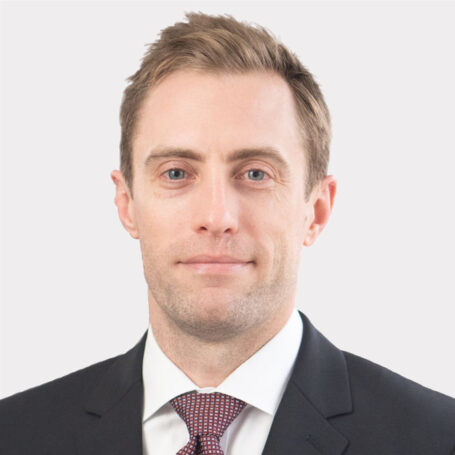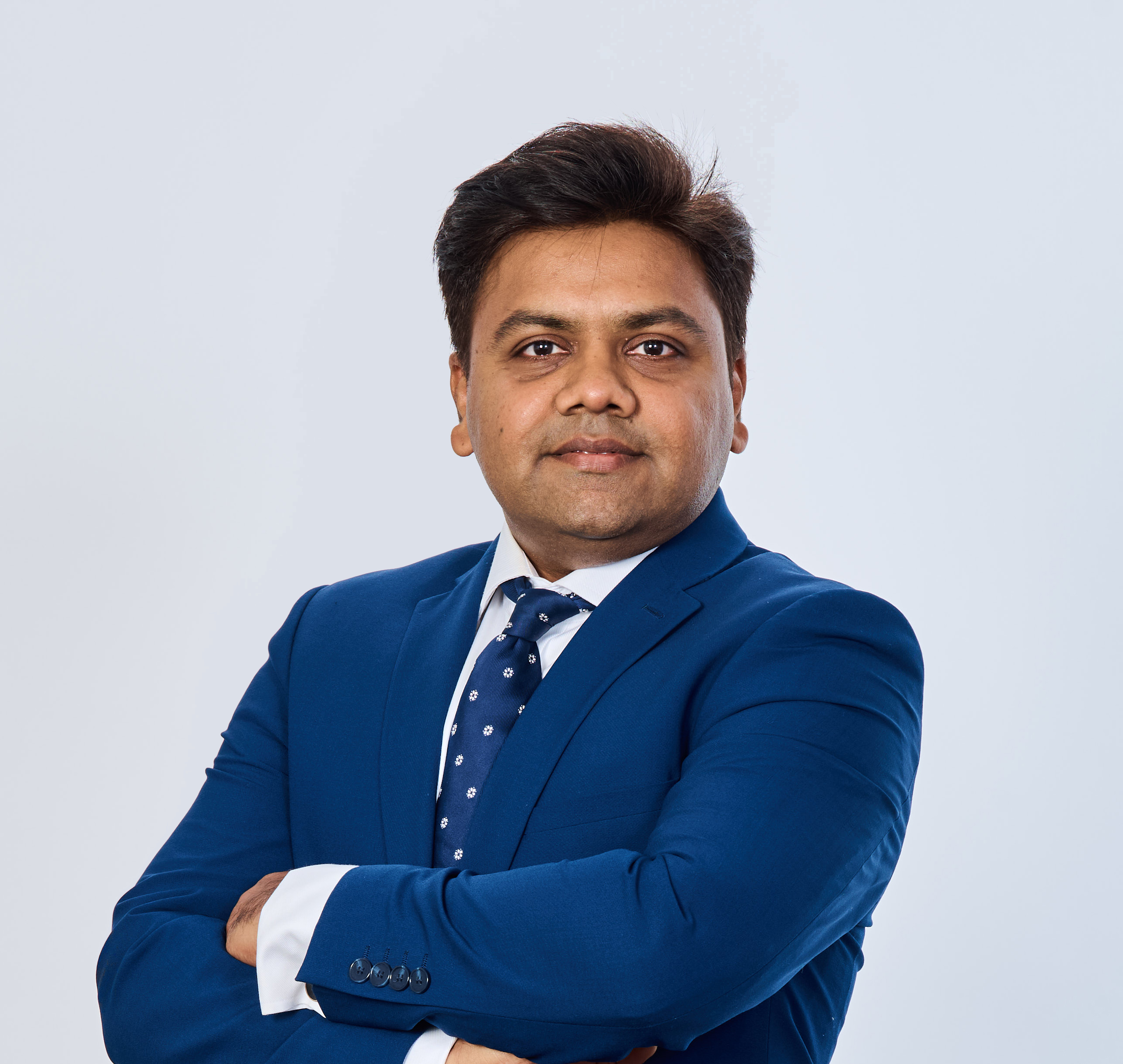
As we initiate the interview, Kunjal Gala says that one of the most interesting facts from last year was that emerging markets outperformed the developed world for the first year in a while. “And by a decent margin,” he says. The outperformance of EM over DM has continued at the beginning of this year and Kunjal Gala says that overall, the market conditions globally are becoming increasingly more favourable for emerging market assets to flourish. He says that there are several reasons for that.
“One, of course, is the dollar weakness that we are seeing because of various policy decisions taken by the US administration. But beyond the dollar weakness, I think one of the things that investors need to realize is that the policymakers in emerging markets are not the same policymakers as they were ten years ago. Someone told me the other day that policymakers in emerging economies are behaving like fiscal grown-ups. I think that is very important,” he says.
In addition to the dollar weakness, Kunjal Gala says emerging markets are also benefitting from both an AI led upcycle as well as a general manufacturing upcycle.
“If you look at the history of EM, whenever there is an upcycle in manufacturing, it typically leads to EM outperformance for several years because the cycle lasts for several years,” he says and adds that a number of countries in emerging markets have also embarked on very ambitious corporate governance reforms, which is another driver.
Asked if it’s fair to assume that the rally we’re currently seeing is more sustainable than previous rallies, his short answer is yes. He adds, however, that for a balanced discussion we also need to talk about the risks.
“Why rallies have not sustained in the recent past can to a large extent be explained by China. It’s a large part of the universe and we’ve had a number of policy issues in China in the past related to Covid, geopolitics and the property market. All if these had an impact on consumer sentiment and the policy to counter that weakness was not adequate. So, China could continue to be a risk. Another risk could be if the manufacturing or AI upcycles that we are enjoying today were to prematurely peak out and start reversing. That could have some knock-on impact on certain economies, like Korea. A third risk, of course, would be another major conflict, such as the one we have between Russia and Ukraine”, he explains. He adds that the team is trying to avoid short-term noise and short-term events and focus on understanding what is happening in the world around us that is more sustainable and durable in nature.
“We are essentially looking for durable shifts that are happening in the world and investing based on the way the world is moving over a longer time period,” he says.
Kunjal Gala also argues that with some 25 countries classified as emerging markets by MSCI, this is not a homogeneous asset class.
“We think that the definition is used quite loosely, and not all economies are moving in the same direction, or at the same speed, at all times. We therefore pay a lot of attention to individual country trajectories and use that as part of our asset allocation and portfolio construction mechanisms,” he says. He adds that the third part of their philosophy, or the third pillar, is grounded in sustainability.
“We focus a lot on what’s sustainable and what’s not sustainable and we don’t pay much attention to the latter. We focus more on what we believe are sustainable businesses – businesses that are aware of the environment in which they are operating, and aware of their social obligations as well. We also pay a lot of attention to ensure that it’s businesses that look after minority shareholders,” he explains. He adds that the team have slightly different views on transition, engagement and climate.
“One factor that’s non-negotiable is corporate governance, because unlike the developed world, in the emerging world you have still a lot of companies with very poor corporate governance practices,” he says.
Talking about transition and companies that are moving from brown to green, Kunjal Gala says they don’t have a problem with transitioning companies per se, but that you need to quantify the financial cost of the transition.
“If we see that the financial cost of the transition is going to be extremely heavy, then I think it’s going to be very tricky for us to put our clients’ money in an opportunity where the free cash flow would be zero or negative for an extended period of time,” he says. He adds that the portfolio maintains a very low carbon footprint on a scope one, two and three compared to the index and that it’s a very conscious decision. “We believe that over time, as regulators and politicians become more aware of the cost to fix the climate problem and meet various obligations like the Paris agreement and so on, very quickly the burden of that transition is going to pass from the government to the private sector. I think that it is not really valued by investors properly,” he concludes.
Kunjal Gala is one of the speakers at Nordic Sustainable Investment Forum, hosted in Helsinki on February 26. Read more and register to the event here.