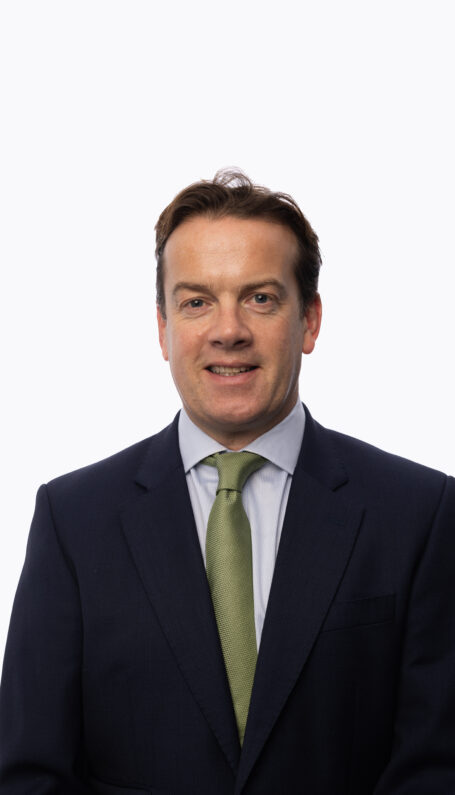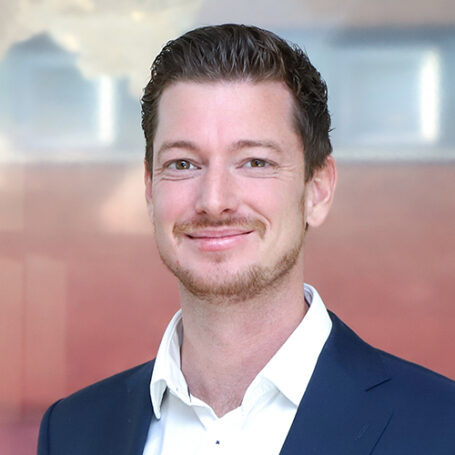
Thiemo Lang joined Polar Capital in 2021 and launched the Smart Energy Fund in September the same year. Prior to joining Polar Capital, he worked at Robeco for some 14 years where he started investing in the clean energy space.
When explaining the investment process, Thiemo Lang says that the first step is to create an eligible universe, which consists of some 250 companies. It’s a process that was initiated when he was working at Robeco and it has continued to be fine-tuned at Polar Capital.
“It’s a continuous process where we constantly ask ourselves if a certain sub-sector should be included or not – and if so, which companies from that sub-sector should be included. In addition, companies must also fulfil all the criteria for the fund to be classified as SFDR Article 9. We also don’t allow utilities with coal generation in the universe for example,” he says. He adds that companies would also be taken out from the universe due to poor ESG rating or due to liquidity reasons.
“We want to have a certain minimum daily turnover and a certain minimum market cap. If a company is not fulfilling it, it will end up in the watch list. And the watch list, as the name implies, is being also monitored on a regular basis,” he says and adds that there are currently some 300 companies in the watch list.
“This is a thematic fund, and I think we have a unique approach, but so does my peers of course. Everyone will have a different interpretation of the theme, and we all have our own priorities, filters and exclusion criteria. It’s important that investors fully understand how each of these funds are constructed and what a specific fund is trying to do,” he says.
The common denominator for the investments that Thiemo Lang makes for the Polar Capital Smart Energy fund is electricity.
“You can say that ‘electrify everything’ is the motto of the fund. With this basic concept, we have specified an investable universe of some 250 companies, which are split into four different clusters: power generation, energy transmission and distribution, energy management and energy efficiency,” he explains and adds that the energy efficiency cluster, which is basically the consumption side of the value chain, is by far the biggest for them.
“When people hear that we manage a clean energy fund they automatically think of wind turbines or solar cells, but for us the power generation side is less than ten per cent of the fund,” he says and adds that it was completely different when he managed a similar strategy at his former employer. “In the early stages of the sector more than 15 years ago, power generation could make up of half of the fund. The investment focus has meanwhile clearly shifted more towards the grid and the demand side,” he says.
Reflecting on the history of the theme, Thiemo Lang says that there have been periods were investments in the sector where difficult due to risks of cannibalization, but that’s not the case today.
“Electricity as a share of total energy consumption increases every year and right now, we are roughly at 20 per cent. We expect that to increase to roughly 60 per cent in 2050. It’s a very long-term and powerful trend,” he says and adds that the most likely limiting factor for further rapid build-out of data centres is not having enough GPUs from Nvidia but having enough electricity.
“What’s currently being discussed is that the hyper-scalers should participate more in the buildout of the power infrastructure, and we also see more focus on on-site generation. That means that they will still have a connection to the grid for backup purposes, but that they will be self-sufficient in energy supply on-site,” he says. Thanks to this trend, he says, they have seen an increased demand for natural gas turbines, because natural gas will play a very important role.
“We also see an increased demand for batteries for on-site storage. The idea is that the utility might not be able to provide electricity during the day but have capacity during the night and then you take the batteries for temporary storage. All of this creates investment opportunities for us,” he says.
When it comes to data centres, Thiemo Lang says that the opportunities are both related to the grid – companies that provide high voltage transformers, such as Siemens Energy and GE Vernova. There are also cable providers like Prysmian.
“There are also opportunities inside the data centre. You have all these power conversion steps to bring the power finally to the GPU, and at all these steps, you have potential efficiency losses. Considering that a huge new data centre could consume 1 gigawatt, just a small reduction in these losses will have a huge impact on your operating costs. Here we see opportunities with semiconductor companies like Infineon, Renesas Electronics and ST Micro,” he says.
Thiemo Lang is one of the speakers at Nordic Sustainable Investment Forum, hosted in Helsinki on February 26. Read more and register to the event here.
Thiemo Lang joined Polar Capital in 2021 and launched the Smart Energy Fund in September the same year. Prior to joining Polar Capital, he worked at Robeco for some 14 years where he started investing in the clean energy space.
When explaining the investment process, Thiemo Lang says that the first step is to create an eligible universe, which consists of some 250 companies. It’s a process that was initiated when he was working at Robeco and it has continued to be fine-tuned at Polar Capital.
“It’s a continuous process where we constantly ask ourselves if a certain sub-sector should be included or not – and if so, which companies from that sub-sector should be included. In addition, companies must also fulfil all the criteria for the fund to be classified as SFDR Article 9. We also don’t allow utilities with coal generation in the universe for example,” he says. He adds that companies would also be taken out from the universe due to poor ESG rating or due to liquidity reasons.
“We want to have a certain minimum daily turnover and a certain minimum market cap. If a company is not fulfilling it, it will end up in the watch list. And the watch list, as the name implies, is being also monitored on a regular basis,” he says and adds that there are currently some 300 companies in the watch list.
“This is a thematic fund, and I think we have a unique approach, but so does my peers of course. Everyone will have a different interpretation of the theme, and we all have our own priorities, filters and exclusion criteria. It’s important that investors fully understand how each of these funds are constructed and what a specific fund is trying to do,” he says.
The common denominator for the investments that Thiemo Lang makes for the Polar Capital Smart Energy fund is electricity.
“You can say that ‘electrify everything’ is the motto of the fund. With this basic concept, we have specified an investable universe of some 250 companies, which are split into four different clusters: power generation, energy transmission and distribution, energy management and energy efficiency,” he explains and adds that the energy efficiency cluster, which is basically the consumption side of the value chain, is by far the biggest for them.
“When people hear that we manage a clean energy fund they automatically think of wind turbines or solar cells, but for us the power generation side is less than ten per cent of the fund,” he says and adds that it was completely different when he managed a similar strategy at his former employer. “In the early stages of the sector more than 15 years ago, power generation could make up of half of the fund. The investment focus has meanwhile clearly shifted more towards the grid and the demand side,” he says.
Reflecting on the history of the theme, Thiemo Lang says that there have been periods were investments in the sector where difficult due to risks of cannibalization, but that’s not the case today.
“Electricity as a share of total energy consumption increases every year and right now, we are roughly at 20 per cent. We expect that to increase to roughly 60 per cent in 2050. It’s a very long-term and powerful trend,” he says and adds that the most likely limiting factor for further rapid build-out of data centres is not having enough GPUs from Nvidia but having enough electricity.
“What’s currently being discussed is that the hyper-scalers should participate more in the buildout of the power infrastructure, and we also see more focus on on-site generation. That means that they will still have a connection to the grid for backup purposes, but that they will be self-sufficient in energy supply on-site,” he says. Thanks to this trend, he says, they have seen an increased demand for natural gas turbines, because natural gas will play a very important role.
“We also see an increased demand for batteries for on-site storage. The idea is that the utility might not be able to provide electricity during the day but have capacity during the night and then you take the batteries for temporary storage. All of this creates investment opportunities for us,” he says.
When it comes to data centres, Thiemo Lang says that the opportunities are both related to the grid – companies that provide high voltage transformers, such as Siemens Energy and GE Vernova. There are also cable providers like Prysmian.
“There are also opportunities inside the data centre. You have all these power conversion steps to bring the power finally to the GPU, and at all these steps, you have potential efficiency losses. Considering that a huge new data centre could consume 1 gigawatt, just a small reduction in these losses will have a huge impact on your operating costs. Here we see opportunities with semiconductor companies like Infineon, Renesas Electronics and ST Micro,” he says.
Thiemo Lang is one of the speakers at Nordic Sustainable Investment Forum, hosted in Helsinki on February 26. Read more and register to the event here.