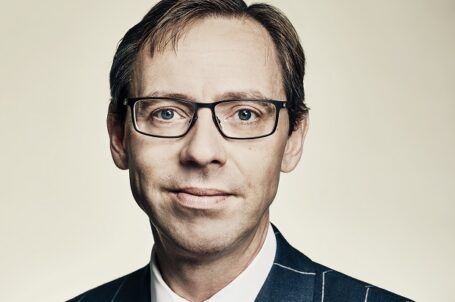
As we sit down for the interview, Jack Stephenson, a US high yield investment specialist at BNP Paribas Asset Management, says that he feels less of an investment specialist and more of a crisis communicator. That says something about the markets we are currently experiencing.
“There are three things that have been dominating the conversations I’ve been having with clients this year. It’s been the AI disruption theme, the private credit headlines, which are obviously linked to that AI disruption story, and since March it’s been about Iran and oil. Not least because energy is the biggest sector within U.S. high yield,” he says.
He continues to say that if one takes a step back and think about where the high-yield market is structurally, fundamentally, from a technical perspective, with a more medium-term view – those elements are still positive.
“We’ve had a strong three years coming off that negative year in 2022. Last year was a little bit different from the previous two years in the sense that we started to see those headlines emerging in the fourth quarter regarding these pockets of risk in other markets. These were impacting on the lower rated part of high yield as well. Last year, we saw CCCs underperforming due to some of those negative stories around First Brands and Tricolor, which really didn’t have anything to do with the high yield market. It still created some jitters in that lower rated part of all credit markets,” he says and adds that this year has been more complicated.
“We came into this year still with a constructive view on the high yield market. The high yield market has come a long way structurally. Today, this is an asset class that has 60 per cent double B rated and just 10 per cent triple C rated papers. It has a much greater percentage of secured bonds. A third of our market is secured debt today. It has record low duration and much improved liquidity,” he says.
He explains that there’s been these structural drivers in the background which have naturally impacted spreads. He continues to explain that technical factors have also been positive with demand vastly outstripping supply for the best part of three years.
“If we look over the medium-term, the outlook for high yield is still strong, but we have these negative headlines that have a short-term impact,” he says and adds that we’ve seen decompression amongst credit quality segments during recent periods of volatility. On AI disruption specifically, the sell-off has been fairly indiscriminate within potentially impacted sectors. He says that this, to some extent, is justified given the uncertainty around how AI will impact these businesses.
“But we need to differentiate between the different kinds of risks and at some point, the market will start to differentiate between winners and losers. We’ve been doing that within our AI disruption framework for some time,” he says and adds that investors need to differentiate between what can be seen as systems of record versus systems of workflow.
“The systems of record are more vertically integrated, hold very proprietary data sets and is very hard for AI to replicate. Systems of workflow on the other hand are more of an horizontal solution that sits on top of the system of record, and this is potentially easier for AI to replicate,” he says and adds that they have been quite active recently.
“We’ve been active both in selling down some positions and selling down some overall exposure to the space, while at the same time looking for opportunistic purchases to benefit from the repricing. We’re also making relative value trades within capital structures. These are the ways in which we’re approaching it. In certain cases, where there’s greater uncertainty or potentially more AI disruption risk, we of course ask ourselves what’s the most appropriate price point at which we’d feel comfortable owning that name,” he says.
Talking about the headlines we see related to private credit, Jack Stephenson says that it is healthy for the overall economy that private credit has taken a lot of market share from the banks for riskier funding solutions, such as leveraged buyouts.
“We’d rather see that sort of lending in private credit world than on the bank balance sheets, which is where it was before 2008,” he says.
Asked if the importance of underwriting and only selecting the right deals in private credit can be translated to the liquid markets, Jack Stephenson says that he feels quite happy in the liquid space right now. He adds that the big difference between the liquid and illiquid markets is that the private credit managers have to live with the decisions that they made on the underwriting several years ago.
“Even if we get an investment thesis wrong or if the underwriting doesn’t play out the way in which we thought it would – we can close that position. We can move on to other opportunities,” he says. He adds that they don’t see private credit being in a doomsday situation at all, even if confidence in the asset class is being tested.
“We see a lot of opportunities across the leveraged finance landscape. However, we’ve been in a weaker covenant era for many years within all markets and that was because we’ve been in an era of low interest rates and very high demand to access deals. In a good market, investors were willing to forego those stronger covenants and we’re seeing some of that playing out right now,” he says.
Asked about the underwriting in high yield, Jack Stephenson says that not an awful lot has changed. “The underwriting is always extremely important. We always approach the market from a bottom-up perspective to really try to understand the drivers of the company. I would say though that we are in a market where understanding the covenants and the legal protections has become even more important,” he says.
// Read more about the Nordic Fund Selection Forum 2026 here.
As we sit down for the interview, Jack Stephenson, a US high yield investment specialist at BNP Paribas Asset Management, says that he feels less of an investment specialist and more of a crisis communicator. That says something about the markets we are currently experiencing.
“There are three things that have been dominating the conversations I’ve been having with clients this year. It’s been the AI disruption theme, the private credit headlines, which are obviously linked to that AI disruption story, and since March it’s been about Iran and oil. Not least because energy is the biggest sector within U.S. high yield,” he says.
He continues to say that if one takes a step back and think about where the high-yield market is structurally, fundamentally, from a technical perspective, with a more medium-term view – those elements are still positive.
“We’ve had a strong three years coming off that negative year in 2022. Last year was a little bit different from the previous two years in the sense that we started to see those headlines emerging in the fourth quarter regarding these pockets of risk in other markets. These were impacting on the lower rated part of high yield as well. Last year, we saw CCCs underperforming due to some of those negative stories around First Brands and Tricolor, which really didn’t have anything to do with the high yield market. It still created some jitters in that lower rated part of all credit markets,” he says and adds that this year has been more complicated.
“We came into this year still with a constructive view on the high yield market. The high yield market has come a long way structurally. Today, this is an asset class that has 60 per cent double B rated and just 10 per cent triple C rated papers. It has a much greater percentage of secured bonds. A third of our market is secured debt today. It has record low duration and much improved liquidity,” he says.
He explains that there’s been these structural drivers in the background which have naturally impacted spreads. He continues to explain that technical factors have also been positive with demand vastly outstripping supply for the best part of three years.
“If we look over the medium-term, the outlook for high yield is still strong, but we have these negative headlines that have a short-term impact,” he says and adds that we’ve seen decompression amongst credit quality segments during recent periods of volatility. On AI disruption specifically, the sell-off has been fairly indiscriminate within potentially impacted sectors. He says that this, to some extent, is justified given the uncertainty around how AI will impact these businesses.
“But we need to differentiate between the different kinds of risks and at some point, the market will start to differentiate between winners and losers. We’ve been doing that within our AI disruption framework for some time,” he says and adds that investors need to differentiate between what can be seen as systems of record versus systems of workflow.
“The systems of record are more vertically integrated, hold very proprietary data sets and is very hard for AI to replicate. Systems of workflow on the other hand are more of an horizontal solution that sits on top of the system of record, and this is potentially easier for AI to replicate,” he says and adds that they have been quite active recently.
“We’ve been active both in selling down some positions and selling down some overall exposure to the space, while at the same time looking for opportunistic purchases to benefit from the repricing. We’re also making relative value trades within capital structures. These are the ways in which we’re approaching it. In certain cases, where there’s greater uncertainty or potentially more AI disruption risk, we of course ask ourselves what’s the most appropriate price point at which we’d feel comfortable owning that name,” he says.
Talking about the headlines we see related to private credit, Jack Stephenson says that it is healthy for the overall economy that private credit has taken a lot of market share from the banks for riskier funding solutions, such as leveraged buyouts.
“We’d rather see that sort of lending in private credit world than on the bank balance sheets, which is where it was before 2008,” he says.
Asked if the importance of underwriting and only selecting the right deals in private credit can be translated to the liquid markets, Jack Stephenson says that he feels quite happy in the liquid space right now. He adds that the big difference between the liquid and illiquid markets is that the private credit managers have to live with the decisions that they made on the underwriting several years ago.
“Even if we get an investment thesis wrong or if the underwriting doesn’t play out the way in which we thought it would – we can close that position. We can move on to other opportunities,” he says. He adds that they don’t see private credit being in a doomsday situation at all, even if confidence in the asset class is being tested.
“We see a lot of opportunities across the leveraged finance landscape. However, we’ve been in a weaker covenant era for many years within all markets and that was because we’ve been in an era of low interest rates and very high demand to access deals. In a good market, investors were willing to forego those stronger covenants and we’re seeing some of that playing out right now,” he says.
Asked about the underwriting in high yield, Jack Stephenson says that not an awful lot has changed. “The underwriting is always extremely important. We always approach the market from a bottom-up perspective to really try to understand the drivers of the company. I would say though that we are in a market where understanding the covenants and the legal protections has become even more important,” he says.
// Read more about the Nordic Fund Selection Forum 2026 here.