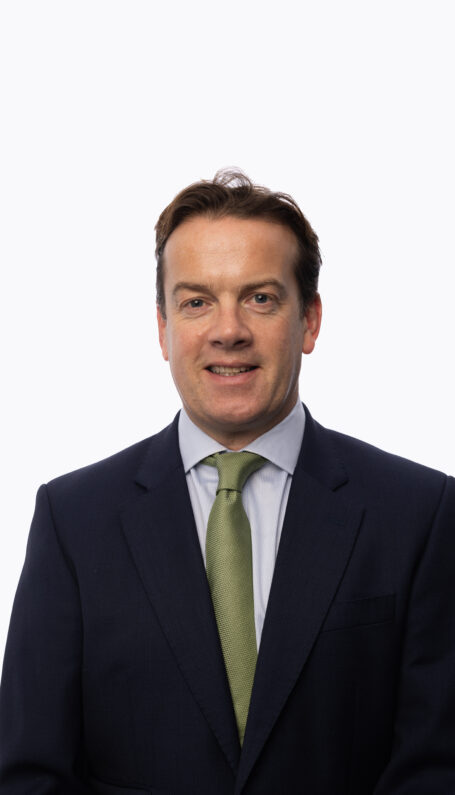
Anders Årjes has many decades of experience from the financial industry having also worked at the buy side as an analyst and then as the head of equities at Swedish AP4.
He joins LGIM from Deutsche Bank where he worked as director in institutional equity sales. Prior to his almost decade long post at Deutsche Bank, he worked as an account manager in institutional equity sales at Credit Agricole Cheuvreux Nordic.
What attracted you to your current job?
LGIM has done a great job over the years building a book of large institutional clients in the Nordic region out of the UK. The broad range of capabilities and products as well as recognition as a vocal and responsible investor are a good fit. When I was asked to set up the Nordic office to broaden our presence and expand the business further it did not take too much consideration from my part. Having spent over ten years in institutional equity sales and more than ten years in research/portfolio management, this role offers a new and exciting opportunity where I can leverage off both. In addition to LGIM’s investment capabilities, key attractions to me in the hiring process were the people, company culture and long-term commitment to international growth.
What are the most notable news at the company?
Following the launch of the L&G Emerging Markets Equity Future Core Fund late last year, which is fossil free and builds on our proprietary ESG scores linked to engagement and voting, we are currently developing an investment strategy that will help meet the Paris Climate objectives. Both offering relevant core ESG exposure for institutional investors in the Nordics and the rest of Europe. We have also expanded our thematic ETF range further including the Hydrogen Economy ETF, first of its kind in Europe. Our investment stewardship has recently been very busy in the AGMs voting season. At Exxon’s AGM at the end of May, for example, we voted against the chair/CEO of ExxonMobil for the second consecutive year, and we also supported activist hedge fund Engine No 1’s successful efforts to appoint three new board members over dissatisfaction with the company’s climate and capital allocation strategy. This comes after a suite of successful shareholder proposals, which LGIM also supported, calling on other US oil majors to strengthen their climate targets. Our targeted climate engagement programme, the “Climate Impact Pledge” was launched in 2016 and remains a key focus for us and we will publish this year’s report on progress later this month. LGIM already has a successful presence in Europe and we have strong ambitions to grow further over the next few years and continue to make key hires across the region.
What do you see as some of the main trends among Nordic investors and how are you looking to serve that need?
In equities we are seeing a trend towards tailored index exposures to meet specific ESG criteria, climate alignment as well as for factor tilts. Additionally, large institutions in the region remain active in seeding funds and ETFs. In fixed income, active as well as passive, there is a clear trend towards ESG as well as for increasing allocations to higher risk asset classes. We have strong capabilities in index equity and fixed income as well as active fixed income, so we are well positioned to serve clients in these areas. Alternatives continues to be a focus area for investors. LGIM has a strong real estate and private credit offering as well as a growing infrastructure platform in the UK, areas we want to grow in Europe.
What are your most successful strategies in the Nordics and why?
To date the most successful strategies are related to our EUR 500 billion index business, both fixed income and equities, where we have worked to build tailored solutions as well as pooled products. Being the largest non-US index manager and recognised as one of the leading responsible investors globally are strong positives as is our track record in creating value through our pragmatic replication index philosophy. We are pleased to have large pension clients like AP1 as initial investors in the L&G Emerging Markets Equity Future Core Fund. Encouragingly our active fixed income strategies, like global high yield and emerging market debt, are also gaining traction and we are seeing a growing interest in our thematic ETFs.
How have you kept relations going with Nordic investors during the pandemic?
We opened our first Nordic office in May last year although LGIM was already covering the region from our London headquarters for a number of years. Relations with established clients have worked well since adjusting to virtual meetings, whilst expanding into new relationships has been more challenging. On balance we have made very good progress in the year and expanded our footprint across all four markets in the region.
What is the most difficult sell in the Nordics at the moment?
Institutional investors in the region are very sophisticated and have a clear view of what type of exposures or products they are looking for. The market is highly competitive with local managers as well as most large international mangers being present. Strong buyers and tough competition make any sell difficult, even when capabilities and products are a good fit. With more focus on SFDR, funds below article 8 will prove a challenge going forward.
Going forward, what do you believe Nordic investors should consider or do to a greater extent?
Mandates and strategies vary significantly so there is no ‘one size fits all’ answer to that question. On the one hand you have sovereign and pension system buffer funds with an extremely long investment horizon, and on the other pension funds in a run-off stage. Most asset owners use the largest part of the risk budget in the asset allocation but there is a wide spread between active vs. passive strategies within asset classes. The common denominator still is the use of standard market cap benchmarks. Adopting to a higher level of ESG standards on a benchmark level would be a positive and support a speedier transition to climate aligned portfolios. I also think that passive exposures would benefit from allowing some tolerance on tracking error as strict replication is not cost effective. Using systematic strategies like index plus is a good way to enhance returns for a core exposure.
What do you see as some of the key ESG challenges at the moment among Nordic investors?
Nordic investors are at the forefront of responsible investing and have considered ESG in the investment guidelines for a long time. Around 70 asset owners and the vast majority of AUMs are PRI signatories so there is a strong commitment. That said, I think the mid-term challenges for most investors are related to the rapid adjustment to climate aligned strategies, regulatory developments and impact on reporting. There is still a shortage of consistent ESG data, most notably in credit, which is potentially also an issue.
When you do expect to be back on the road again and how are you preparing for this?
With very few exceptions I was actually never able to go on the road due to the restrictions. I expect us to be in a better position sometime after summer. Connecting and meeting virtually have worked well in understanding the asset owners’ mandates, organisations and mapping relevant focus areas across the region. As such we are well prepared and keen to be able to meet face to face again.
What book would you recommend to colleagues?
The Wolf and the Watchman by Niklas Natt och Dag. It’s a gruesome story and a vivid portrait of Stockholm in the late 1700s. Not for the faint-hearted though.
What do you enjoy doing outside office hours?
I enjoy spending time with the family. Cooking, travelling and outdoor activities keep us together although the children now 19 and 21 are finding their own way out and away. I have also grown a passion for construction work and carpentry over the years, which has led to golf clubs and road cycle now being tucked away.
Anders Årjes joined Legal & General Investment Management (LGIM) last year to head the asset manager’s first Nordic-based office in Stockholm, from where he reports to Volker Kurr, head of Europe’s institutional clients at LGIM.
Anders Årjes has many decades of experience from the financial industry having also worked at the buy side as an analyst and then as the head of equities at Swedish AP4. He joins LGIM from Deutsche Bank where he worked as director in institutional equity sales. Prior to his almost decade long post at Deutsche Bank, he worked as an account manager in institutional equity sales at Credit Agricole Cheuvreux Nordic. What attracted you to your current job? LGIM has done a great job over the years building a book of large institutional clients in the Nordic region out ofIf you’re new to Tell Media Group, create an account.
Read more about our memberships