The biggest asset allocation change over recent years at Pensam has been a significant increase in its exposure to unlisted investments. Unlisted investments now make up about half of the assets of the Danish pension company’s main pension product Fleksion, which holds about DKK 100 billion (EUR 13.4 billion) out of its DKK 170 billion in total assets. Unlike its other pension products that provides its customers with guarantees, Fleksion offers customers an average rate, which allows for greater risk capacity and more flexibility.
The pension company has furthermore employed a very specific – and in some instance rather innovative – approach to how to gain its exposure and manage its alternatives allocation, which stretches across private equity, private credit, infrastructure and real estate.
In 2017, Pensam established a collaboration with the private equity manager Churchill, which is part of Nuveen and manages assets on behalf of TIAA, the US teachers’ pension plan. Signing the agreement was also one of the first things Claus Jørgensen did after joining Pensam as its chief investment officer. The investments in the US via Churchill now make up the bulk of its private equity allocation and has served as a blueprint for its strategy elsewhere in the alternatives portfolio.
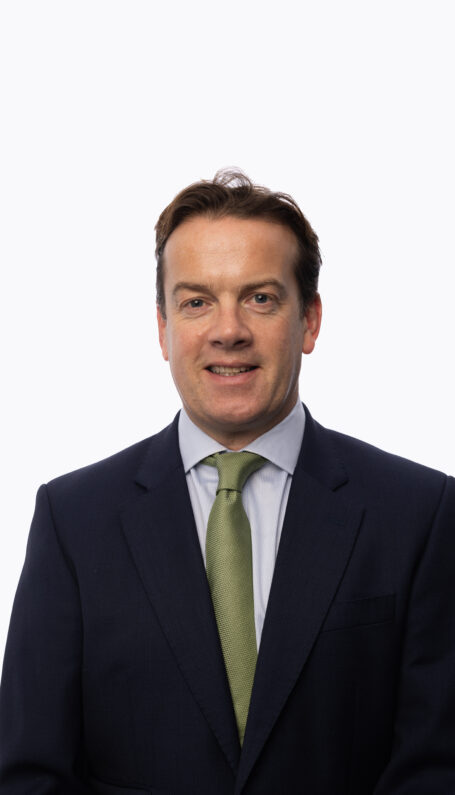
Claus Jørgensen says that Pensam has been very pleased with the setup. “First of all, we get a very professional management of the portfolio – they have a very big and experienced team – and we also get it at a very good price,” he says.
Instead of investing in private equity funds, Pensam focuses on making co-investments alongside other principal investors. “Churchill makes commitments to private equity funds in the US on behalf of TIAA and gets a lot of co-investment opportunities. They can’t take on all of the exposures themselves, so we get an allocation of these co-investments. Most of our private equity exposure today is these co-investments with the TIAA,” Claus Jørgensen explains. In private equity, Pensam focuses on mid-market buyout.
The great experiences with its US partnership sparked Pensam to establish a similar collaboration for its European private equity allocation. Last year, Pensam signed an agreement with the Australian manager QIC. “We were looking to copy the setup we have with Churchill in the US and tried to find someone that could offer some of the same things in Europe,” Claus Jørgensen says. In the search for a European partner, he notes that alignment of interest was key. With QIC, which is a government-owned investment company, Pensam is investing alongside some public money from Australia.
Pensam initially committed EUR 300 million to the QIC mandate for a three-year period and recently decided to increase the mandate with another EUR 100 million. “Some of this will be fund investments in Europe but a big part of the portfolio is co-investments. We expect 60 to 70 per cent to go into co-investments, so it’s a very cost-efficient way to invest,” says Claus Jørgensen.
While the pension company has a legacy portfolio of private equity funds, the private equity partnerships in the US and Europe will form its core exposure to the asset class going forward. On top of that, Pensam is also looking to add some more thematic and opportunistic exposures.
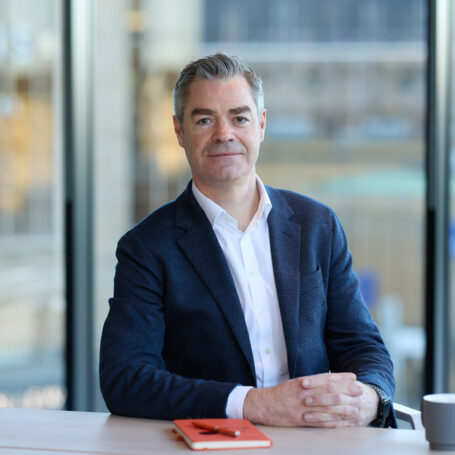
Impact investing is one theme. Jeppe Starup, Pensam’s head of private capital and real assets, notes that the pension company already previously has made some impact investments on the infrastructure side within the renewable energy space. “We found that within private equity, there’s also an opportunity to align ourselves with managers focusing on sustainable business models – the aim is to invest in businesses that do good as well as make money. It could be tech enabling, renewables, health care or education,” says Jeppe Starup, who heads up a 14-member strong alternative investment team.
Pensam is also eying opportunities coming from the increased use of private equity continuation vehicles, which are vehicles that aim to extend the holding period of one or more assets from an existing fund. “We’ve experienced that due to the lack of liquidity in markets, a lot of GPs have been building up portfolios but have trouble selling on those investments. They’ve been looking into continuation vehicles as a means of exit. We don’t like them when we’re on the LP side. We’ve had a couple of those offers and they’re often not very nice – it’s a very binary choice of being bought out or going with the new structure. You risk leaving a lot of money on the table if you choose the liquidity option,” Jeppe Starup says.
However, Pensam believes this trend could be interesting to approach from a different angle. “As we’re net investors about whether we could take advantage of that trend,” Jeppe Starup says. “We’re currently exploring whether we could invest only on the continuation vehicle side, so in the managers that offer these vehicles for GPs. Could we be part of that as an investment strategy rather than being on
the receiving end of those offers?”
The answer to that question is likely to be yes as Jeppe Starup says that Pensam is close to choosing a partner to invest with and estimates that the pension company could begin investing over the coming months if all goes well. “I think this is going to be a very interesting space going forward. It doesn’t look like the liquidity window is opening up
anytime soon and there’s a great need for liquidity in these GP portfolios. Investors want their money back and GPs want to clear the desk to raise new funds,” he comments.
Pensam might also expand the partnership approach to other alternative asset classes. “Since the Churchill mandate has been so successful for us, we would like to see if can replicate it in other asset classes. We would like to see if we can do something similar on the infrastructure side and maybe even on the non-domestic real estate side. As part of the process, we will be screening potential partners and see if someone fits the bill. We’re basically looking for three things: professional management, low costs and good governance. Those are my three commandments to the portfolio managers – and it’s not as easy as it sounds,” Jeppe Starup remarks.
Private credit is otherwise the biggest asset class in Pensam’s alternatives portfolio. The Fleksion portfolio has a 17 per cent allocation to the asset class, divided between 13 per cent of high risk and 4 per cent low risk private credit.
Asked whether Pensam has considered teaming up with a partner on the private credit side as well, Claus Jørgensen doesn’t see it as a necessity. “We try to keep the managers down to a reasonable number but we also want to take advantage of some funds having specific skills in certain segments of the markets,” Claus Jorgensen says.
Similar to private equity, Pensam favours co-investments in the private credit space. “Just like a lot of other institutional investors, we like co-investments for obvious reasons – it averages down your fees as you’re typically not paying management or performance fees on co-investments,” says Jeppe Starup. “It also gives you a lever in terms of getting closer to the manager and allows you to actively tilt your portfolio, so you can do a bit more conviction-based investments.”
The pension company has, however, put some efforts into establishing a better structure for these investments. Some two years ago, Pensam set up its own co-investment vehicle for private credit in order to handle the investments in a more efficient way. Jeppe Starup sees this as a rather novel structure. “Co-investments will typically sit in vehicles at the manager level, either just managed on our behalf or with other investors,” he explains. “After a couple of years, you end up with multiple co-investment vehicles at different managers. While you’re not paying fees, you do have the operating expenses for setting up these vehicles and the running costs. You also get a lot of line items in your portfolio. The task we set out for ourselves was whether we can do this in a smarter way.”
This resulted in the new subsidiary called Pensam Credit, which is a Denmark-domiciled co-investment vehicle exclusively dedicated to its co-investments in private credit. “We’ve entered into master co-investment agreements with our most core managers. If they offer us co-investments, we will get a direct piece of the loan that will sit in our vehicle. At the same time, the managers will retain their governance rights for the loan, so they will monitor the loan, do the reporting and control the exit etc,” says Jeppe Starup. He points out that the structure not only reduces the operational expenses for Pensam but also leads to better governance and control. Some of its co-investments made in the past have also been transferred into the vehicle, allowing for further cost savings.
The biggest asset allocation change over recent years at Pensam has been a significant increase in its exposure to unlisted investments. Unlisted investments now make up about half of the assets of the Danish pension company’s main pension product Fleksion, which holds about DKK 100 billion (EUR 13.4 billion) out of its DKK 170 billion in total assets. Unlike its other pension products that provides its customers with guarantees, Fleksion offers customers an average rate, which allows for greater risk capacity and more flexibility. The pension company has furthermore employed a very specific – and in some instance rather innovativeIf you’re new to Tell Media Group, create an account.
Read more about our memberships