The discussion started with the asset managers sharing their thoughts on where we are right now with regards to small caps and where they see the market developing going forward.
Jim Shore: “I think it’s been the asset class that has always held out promise, but it has been a difficult stretch for investors within the small cap space over the last several years. It was particularly hard hit when we saw that rapid rise in interest rates in 2021. We do think that a lot of the headwinds that small caps have faced over the last years are starting to lessen and valuations look much more compelling in an overall equity market that looks quite expensive to us. I would say we are cautiously optimistic about small caps going forward and we think that the prolonged period of underperformance has created opportunities for investors looking at the asset class.”
Rory Stokes: “I’d agree with a lot of that. Looking back to 2021 we’ve had a series of headwinds, at least in Europe, in terms of an energy shock, an interest rate shock, an inflation shock, a supply chain shock and more recently, a tariff discussion shock. A lot of this is not headwinds anymore and we’re starting from a valuation point that looks very cheap.”
Thomas K. Skjoldmo: “We currently only have a small allocation, but we are of course observant of the huge valuation gap. One must, however, also be aware that the composition of the small cap market has changed a lot over the last few years. For one we have more unprofitable companies in the indices – especially in the US. We have also seen the growth of the private equity industry where smaller companies are kept private for longer. That said, if we will have falling interest rates and healthy growth small caps is absolutely something that should be considered now – not least from a valuation perspective.”
Niklas Tell: Emil, I know that you mainly focus on the Nordics – do you see similar trends here?
Emil Johannessen: “Definitely. I think now that we have a combination of monetary policy easing, inflation a bit under control and increased government spending – it kind of favours those domestic oriented small cap stocks. And the valuation is reasonable. But we have to avoid a recession because small cap equities don’t have the same buffers as larger companies. What we’ve seen, however, in the recent past is that it’s smaller companies that don’t earn money that’s been doing well, whereas higher quality small caps have been lagging. I don’t think this will continue.”
Karsten Solberg: “One of the most interesting discussions when it comes to small cap investing is whether the small cap risk premium is just an illiquidity premium, or if we over normal investment horizons should expect a premium versus the general market return. That’s a big discussion and we do think that the small cap premium is something that we should offer to our clients. We of course would like to also see some alpha on top of that.”
Jim Shore: “When we talk about the asset class, I think it is critical to differentiate between owning the asset class in a passive manner versus using an active manager who for example can focus on quality or earnings growth and maybe avoid some of the current froth in the markets. One example from the US market is a company called Oklo that will produce small modular nuclear reactors. It has a market cap of some USD 20 billion, and the stock is up over 400 per cent year to date but the company has no revenues.”
Niklas Tell: I guess that makes it challenging to be an active fundamental manager if companies like that drive index performance.
Jim Shore: “Definitely in the short term. I think this has been the worst time in over the last 25 years for active managers, specifically within the US, but we don’t think that can be sustained. We’re optimists, but it’s been challenging over the last six months.”
Rory Stokes: “You don’t get pessimistic small cap fund managers.”
Niklas Tell: Have you seen something similar in Europe, or is this more of a US phenomenon?
Rory Stokes: “Loss-making companies being relevant in the benchmark is less of an issue in Europe – even if we’ve seen a low-quality rally during the fall. However, the use of the capital markets to finance early-stage growth is not really a phenomenon outside of the US.”
Niklas Tell: How big of a challenge is the private equity market with companies staying private longer and possibly growing bigger outside of the listed market?
Rory Stokes: “There’s a lot of talk from the private equity industry on this – that they’ve got the highest quality companies only that they haven’t listed them yet. The reality is more likely to be that they’re carrying them at marks that they can’t genuinely sustain and there’s no one to buy them. The only markets that really matter when it comes to pricing companies are liquid public markets. There are impediments to being a public company in terms of disclosure and regulation, but the idea that the private equity industry has got all the best companies and they’re just hiding them from us for longer is just nonsense.”
Jim Shore: “I would agree, but it should be said that there are certain segments within the US where we probably have seen a shortage of new good opportunities, such as software. There are companies that will likely come out at USD 40 billion or more, and they will never be in the small cap space.”
Karsten Solberg: “I think one of the advantages of private equity companies is that they’re not exposed to the same short-term noise as listed companies having to provide quarterly results and focus on market expectations. They can take a longer perspective.”
Rory Stokes: “There are not too many things I’d agree with President Trump about, but reducing the frequency of earnings reports would be a very sensible measure to make public markets function better.”
Niklas Tell: When you are talking to clients – what are some of the reasons they highlight as reasons for owning small caps? Is it mainly to access faster growing companies or is it more used as a hedge or diversifier to the concentrated markets that we have today?
Jim Shore: “I think it’s a combination of both. A lot of clients still look at this as an asset class where you can see higher returns over time – even if we haven’t seen that for some time. In the US, it’s been 13 years since small caps outperformed large caps. Then we of course hear a lot of concerns related to how concentrated the market is and here small caps can give you a very different exposure. It’s also important to highlight that this is still an inefficient asset class. As an active manager we would argue that this is one of the places over the long term that you should expect to see higher levels of alpha relative to large caps.”
Rory Stokes: “I think almost every fund manager that’s not a US large cap fund manager is competing with the mag seven at the moment. But the idea that these mega-cap tech companies should continue to outgrow everything else just becomes infeasible from a mathematical perspective at some point and a broadening of the market is something that intuitively has to happen.”
Niklas Tell: How should you own small caps? Do you need to be more long-term when investing in small caps – or do you need to be more opportunistic?
Thomas K. Skjoldmo: “I think it’s very difficult to be tactical. We have a long-term time frame for most of the portfolios that we manage. We also lean towards active managers. If you look at S&P Insights figures, some 96 per cent of large cap managers underperform the indices and the corresponding number for small cap managers is 81 per cent. That’s a significant difference.”
Niklas Tell: How different is it to evaluate a small cap manager versus a large cap manager?
Karsten Solberg: “That’s a good question. I think we need to have very clear views if the manager shows abilities to go beneath the surface because it’s all about stock picking in this space. We need to see deep knowledge and that the manager has an ability to take advantage of this under-analysed asset class. We think that it’s possible to create alpha in small cap investing, so understanding the bottom-up capabilities is very important for us.”
Emil Johannessen: “We also like to see independent thinking because there’s not that much brokerage coverage of small caps. You need a manager that wants to roll up their sleeves and do the digging.”
Niklas Tell: What would you say are some of the behavioural traps that you can fall into as a small cap manager?
Rory Stokes: “I think the behavioural traps are the same traps that sort of all humans face everywhere – such as confirmation biases. You really have to try to take all the emotion out of it. Fund managers are famously not short of ego, so you have to battle yourself the whole time and as why you are right or why you are wrong. That’s why it’s good to have challenging colleagues around as well as a culture of asking the difficult questions.”
Niklas Tell: Another aspect about small caps is that you are able to get closer to the companies and I assume you get to know the management teams.
Rory Stokes: “You definitely have better access to the management teams. The companies themselves are also a lot simpler. I mean, I don’t even know where I’d start if I was trying to begin a page one analysis on Microsoft compared to looking at a small cap software company in Europe where I get to meet the CEO and they have two products. It’s just a different world.”
Jim Shore: “This also means that management teams often can have a much bigger impact on a small cap company. If Microsoft launches a new product or Adidas launches a line of shoes, it’s unlikely to move the dial. If a small company in our universe launch that third product, or if they expand into a new geography, it comes with risk, but it also comes with a lot of opportunity. Change just happens more frequently within small caps.”
Niklas Tell: If we agree that we are seeing a shift away from globalization – how is that affecting small caps?
Rory Stokes: “It depends. It’s going to be good for some companies and bad for others. Ever since Covid we’ve seen that companies are focusing more on the resilience of the supply chains – so basically having at least two sources of everything. The tariff dynamic complicates that in many ways as well, because companies might have a part coming from China and a part coming from Romania. By the time it’s assembled into a machine, they don’t know which part is which – and the American government wants to know. Again, this is what’s great about small cap. You have this heterogeneous market, so you should always be able to find something that’s having a good time, even if net-net it’s maybe a less good economic world overall.”
Jim Shore: “I would agree with Rory that it depends, but because small caps in general are more domestically focused, they should be a bit more insulated from this. They probably didn’t benefit as much as your average large cap company from globalization over the past several years, so on the margin, small caps shouldn’t be as affected.”
Emil Johannessen: “I would agree with both arguments. On balance a more regional world should be more positive for small caps. But then you of course have small exporters, who are reliant on global supply chains, and they would have a much tougher time.”
Niklas Tell: How would you say that small caps fit the current structural trends of AI and electrification?
Rory Stokes: “When I started my career, Vodafone was more than 10% of the FTSE. They’d just bought Mannesmann in Germany and UK fund managers couldn’t allocate enough to meet the market weight because of their internal risk limits. And over the next three years we of course saw a real shift with the TMT sector falling some 80 per cent. I suspect we’re seeing a similar dynamic when it comes to AI. Yes, this is likely going to change the world in some way – but I think it’s unlikely that the only beneficiaries will be a handful of giant tech companies. I think the beneficiaries are more likely to be the consumer and that probably means that the benefits will spread through the broader economy and the broader market.”
Jim Shore: “I would largely agree with that. On the one hand you of course want to own companies that have growing end markets, but then you should clearly analyze how sustainable that growth is, the quality of management, and their competitive positioning.”
Thomas K. Skjoldmo: “I also think that AI and new technology could mean that it will be easier to scale smaller companies. We’ve seen some stories about that here in Norway recently – it’s quite amazing how smaller companies are able to scale very quickly to a changing environment.”
Niklas Tell: As fund managers – what do you think investors should focus more on when meeting you?
Rory Stokes: “When we meet company management, we never let them go through the slide deck one page at a time because then they’re controlling the agenda and the flow of information. I think clients who sit down with us and have a clear agenda of what they want to get out of us are more likely to understand what we’re doing in a far more holistic and rigorous way instead of me just sitting there and giving my pitch points. I think that’s probably true of all interrogative meetings.”
Karsten Solberg: “I would agree with that. Just going through a deck is of interest to either of the parties. We have to be very prepared in order to gain an understanding of what’s really going on.”
Emil Johannessen: “I also think it’s important to focus on how consistent a manager is with their strategy because some 90 per cent of the returns will happen in ten per cent of the time, so having a consistently long-term strategy is very important.”
Niklas Tell: As dedicated small cap managers you will be forced to sell the really good companies because they become mid-caps and large caps. Is that a big challenge?
Rory Stokes: “When you’re looking at a small cap company and there’s only three analysts covering it, you know you’ve got an informational advantage. It makes it easier to find opportunities. As companies grow, they typically become more efficiently priced so you will invariably find yourself selling the mid-cap names at a premium. This premium as you move up in the market cap range is as extreme as it’s ever been if I look at the 25 years’ I’ve been looking at small cap. Mega cap is more expensive than large cap, which are more expensive than mid cap, which are more expensive than small cap. This means that by the time a company moves into the mid-cap space, it’s almost invariably easier to find a more exciting opportunity from a relative return perspective down the market cap spectrum.”
Jim Shore: “It’s also a big enough universe – it’s not like we are ever at a point where there’s a shortage of ideas. Sometimes it does hurt to sell some of those winners, especially when you think they’re very good businesses, but there’s typically at least 20 to 30 names at any given point in time that are fighting to get into the portfolio. Yes, portfolio managers occasionally complain about having to let go of a company that goes into the mid-cap space, but often it is not particularly attractively valued. Instead of having three analysts covering it, it now has 15 analysts covering it so there isn’t that same potential for inefficiency.”
Niklas Tell: What would we highlight as some of the key challenges when it comes to small cap investing?
Rory Stokes: “If you look at it from a holistic level, we increasingly see asset allocators looking at markets as larger macro bets as they’re moving across markets. That means we’re having to fight harder to get the attention and to get the flows. We of course aim to allocate capital to companies that are doing something special rather than because they happen to be in a certain geographic index.”
Emil Johannessen: “Another thing to be mindful about is the quality dispersion within the small cap space and to be able to avoid value traps. While the index can be quite cheap, there’s a lot of unprofitable companies out there.”
Niklas Tell: And what would you highlight as some of the biggest opportunities for small caps?
Jim Shore: “What I think gets most active small cap managers excited has less to do with the macro and more to do with the fact that there’s some very dynamic, innovative and interesting companies out there that have scope to grow in a wide variety of different environments. They’re not going to always get rewarded by the marketplace, and that’s a challenge, especially of late. Ultimately, we do believe if you own a good company within the small cap space that is delivering profitable growth, it will eventually be rewarded by the marketplace.”
Emil Johannessen: “I think another opportunity is M&A activity – especially given the valuation differential between larger and smaller companies that we’ve already discussed.”
Rory Stokes: “We’re absolutely seeing that M&A is becoming a feature in recent months, and I think partly that’s because debt markets are a bit more functional. People can price debt properly now, having been cautious during the big interest rate spike. But as you say, valuation is of course an important reason. I also think that company managements are recognizing that their equity is cheap and that it’s better to buy back their own shares rather than go and buy something else. We’ve seen that in Europe, where share buybacks were a dirty word some ten years ago.”
Karsten Solberg: “Another opportunity could maybe be to avoid the worst IPOs because the statistics for the returns for companies coming to market isn’t that flattering.”
Rory Stokes: “I think the statistics are distorted by the 2021 figures when we had fewer solid companies coming to market. I think prior to that the stats were better – at least in Europe.”
Jim Shore: “Yes, there was a lot of froth in the market at that time. I guess it’s the IPO curse. The bad ones maybe look inexpensive and the ones that are attractive businesses come out at very lofty valuations. So sometimes you can still invest in a company, but maybe not right at its IPO. Maybe it’s better to wait and pick up strong companies following a period of underperformance.”
Niklas Tell: How many holdings do you have?
Jim Shore: “We run a global small cap portfolio, and we typically have between 100 and 150 securities. As a firm, we like the idea of concentrated strategies but for small caps we need to be aware of the greater liquidity risk and the greater fundamental risk. When a small cap company disappoints or its fundamentals change, it sells off quite dramatically. We think we’ve found the sweet spot where we’re still able to add alpha through stock selection, but at the same time help mitigate some of that risk that is just inherent in the asset class.”
Rory Stokes: “We run a variety of funds, so it differs but typically between 90 and 125 names. I would agree with Jim – when you make a mistake in small caps you will find that it’s easier to get into a company than it is getting out. You’ve got to have positions that you can abandon in a sensible way. It’s really important to manage liquidity.”
Jim Shore: “I agree. Managing liquidity risk is an important aspect of being a small cap manager.”
Niklas Tell: What are some of the questions you get from clients these days?
Rory Stokes: “I guess the biggest worry that I get from my clients is if something has structurally changed? Owning small cap up until 2020 meant that you owned it and you made money in the medium term and there was some volatility. The questions clients have today is if we’re seeing a structural gap in valuations between small caps and large caps.”
Emil Johannessen: “I don’t think we’ve seen a structural change in that sense. It’s difficult to imagine a world dominated only by mega caps and unprofitable small caps. Eventually the market will focus on cash flows again.”
Karsten Solberg: “Understanding and foreseeing the turning points of investor sentiment is difficult. If you look a couple of decades back, everyone said that value stocks were the only thing you should buy. Then it was quality growth stocks, and now it’s mega caps. Understanding what’s coming next year is really hard.”
Jim Shore: “You clearly have the hardest job. Finding individual companies might be easier than thinking about the overall asset allocation and what will work going forward.”
Niklas Tell: What traits do you need to be a good small cap manager?
Rory Stokes: “I think there’s a big variety of people and personalities that can be good investors, not just in small caps. Knowing your own mind and being prepared to change your view are probably quite important characteristics. You don’t want to get locked in or fall in love with your own thinking. At the same time, you need to believe in it to be able to act.”
Niklas Tell: Do think you would manage a large cap portfolio in the same way as you manage a small cap strategy?
Rory Stokes: “I guess I would try to, because I don’t know any other way to earn money. I don’t think it would be nearly as much fun though.”
Karsten Solberg: “We’ve talked about the domination of mega caps. What do you think could be the catalyst for that not being the case anymore – so a move to a market more favourable for small caps?”
Jim Shore: “If we look out, I think we do see an environment where small caps are expected to deliver accelerating earnings growth whereas the market thinks there will be a deceleration of growth going forward for companies such as Nvidia, Meta and Amazon. If you start to see a divergence in fundamentals, using earnings growth as a proxy, I think that could be a potential catalyst.”Rory Stokes: “Companies’ shares typically underperform as their return on investment capital goes down. The mega-cap tech company’s business model has shifted from being asset-light, software, network-based to becoming quite capital-intensive without an obvious revenue model associated to it. I’m sure revenue models will come. But it’s not like we’ve got individual monopolies that all happen to just dominate the world anymore. They’re all competing with each other and that implies that the ROI will come down. Intuitively, the multiples being attached to these companies are probably too high and that could drive a rotation of capital away from what looks like more utility-types of companies, rather than giant tech companies. I think that could drive a broadening of the market.”
// Participants
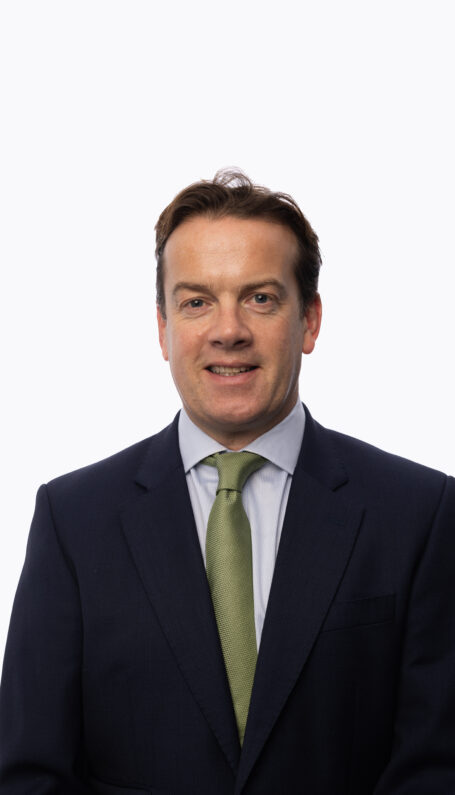
Jim Shore, Senior Client Portfolio Manager at American Century Investments
Rory Stokes, Portfolio Manager on the European Equities Team at Janus Henderson Investors
Karsten Solberg, Senior Investment Manager at Storebrand Asset Management
Emil Johannessen, Investment director at Aars
Thomas K. Skjoldmo, Investment Director & Head of Family Office at Cenzia
The discussion started with the asset managers sharing their thoughts on where we are right now with regards to small caps and where they see the market developing going forward. Jim Shore: “I think it’s been the asset class that has always held out promise, but it has been a difficult stretch for investors within the small cap space over the last several years. It was particularly hard hit when we saw that rapid rise in interest rates in 2021. We do think that a lot of the headwinds that small caps have faced over the last years are startingIf you’re new to Tell Media Group, create an account.
Read more about our memberships