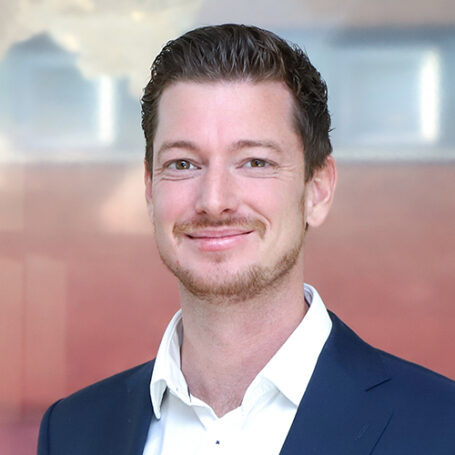
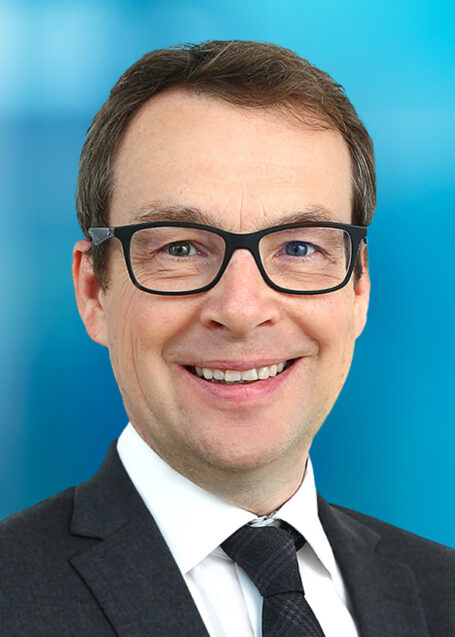
Bjarne Graven Larsen, CEO of Qblue Balanced, explains that one of the key areas for collaboration following the establishment of the strategic partnership will be around semi-liquid products. “One of the things that has become quite clear in the illiquid world is that almost all of the large infrastructure or private equity funds are looking for new sources of capital to continue to grow,” Bjarne Graven Larsen says.
This basically means not just targeting institutional investors but also branching out to reach high net worth individuals and family offices. As Bjarne Graven Larsen observes, there are, however, a number of barriers preventing those investors from allocating to the traditional illiquid funds. “The private equity and infrastructure industry have realised that they need to create semi-liquid products where people invest all commitments up front and there are windows for investors to redeem money. These products have become very popular but they challenge the private equity and infrastructure industry,” he says.
This is where a player like Qblue Balanced comes into the picture. “These funds need to have a pool of liquid investment to temporarily invest in something that makes sense,” Bjarne Graven Larsen continues. “They also need to manage future cash flows and future redemptions, so you need to have liquid buffer capital. These types of investors are also not used to handle currency risk, so you might need to do some FX and interest-rate hedging as well.”
Furthermore, he notes that there are reasons why an infrastructure manager like CIP might not want to take on the management of the liquid part itself. “Investors never really like asset managers to drift. If we or CIP started doing something that wasn’t our core business, not all customers would like that. CIP needs expertise in an area they don’t have today and we can work together in creating better products that are trying to breach the gap between the liquid and the illiquid. I think that’s going to be a huge trend going forward and it has already started,” says Bjarne Graven Larsen, who founded Qblue Balanced in 2018 upon his return to Denmark from Canada after spending two and half years as chief investment officer of Ontario Teachers’ Pension Plan.
While the climate transition is a shared theme at the two managers, there are also some personal connections and shared history. “We’ve known each other for many years. I was actually [CIP’s managing director] Jakob Baruël Poulsen’s teacher at university. Also, before I moved to Canada, I was chairman of the investment committee in CIP’s second fund, so I know the operations and people from there,” says Bjarne Graven Larsen. He adds that there are also some shared values. “We’re very focused on the transition to a low carbon economy but without compromising on the return objective,” he says.
CIP’s first semi-liquid fund is already underway, marketed to Swedish wealth management and family office clients through SEB, but there are also other ideas around potential areas of collaboration. This could, for example, be to launch a fund that brings together their respective company knowledge within the sustainable space or Qblue Balanced providing tail-risk hedging. “The partners at CIP are very creative and visionary,” Bjarne Graven Larsen comments.
Asked whether Qblue Balanced following the strategic partnership is looking to move in together with CIP, which recently relocated its Copenhagen headquarters to a new and much larger building, Bjarne Graven Larsen insists that the two firms will remain separate also going forward. “But I wouldn’t rule out us having our own lease in the same building. The whole idea is to keep Qblue Balanced as an independent founder-driven organisation where we have a co-operation agreement and help them develop solutions but also do things jointly,” he says.
As for any potential risks with the strategic partnership, Bjarne Graven Larsen struggles to think of anything negative. “The worst that could happen is probably that we don’t find enough projects where we could work together. Is that a big problem? Not really. It would be a shame because there’s so much potential but nothing indicates that would be the case,” he says. He adds that the investment agreement, where CIP has increased its stake in the firm to 15 per cent with an option to increase it further to a more meaningful minority, will give Qblue Balanced bigger muscle to do product development faster and expand faster.
“We can speed up our international growth and start to hire people that will help us build the business internationally. CIP is already present in a lot of locations around the world so that will make it easier for us – whether that is through subleasing or through market or regulatory knowledge. I think it will be very helpful in our international expansion to work with them and have this additional capital,” he says.
Qblue Balanced started out by launching an alternative risk premia fund but has over the years broadened its offerings to also include a range of sustainable global equity funds. Its latest addition is within the fixed income universe – a global investment-grade climate transition fund that combines systematic methods with fundamental bottom- up credit assessments. “After the fixed income piece, we’re missing an inflation piece and we’re also working on some climate-specific alpha strategies. The way we think about investments is that you need have exposure to market risk premiums through equities, rates and inflation-hedging strategies. Then you need some liquid alternatives – some kind of premiums that you can harvest systematically – and then you need to figure out whether there are pockets where you think you have the skills to source alpha in a sustainable manner,” he says.
He notes, however, that further product development is not an objective in itself. “The purpose of Qblue Balanced is to help clients solve their problems in a cost efficient and a sustainable manner. To make sure we can help them find the right solutions, we need more building blocks. We don’t create products for the sake of the products – we do it to make sure that if we have a discussion with an insurance company or a pension plan, we’re able to offer them the product that they need,” he says.
// INFLATION PROTECTION INSPIRED BY THE ONTARIO TEACHERS’ PENSION PLAN
Qblue Balanced is currently working on an inflation protection strategy, which will be made up of different building blocks and based on some of the strategies employed at Ontario Teachers’ Pension Plan. The first one is breakeven inflation. “You protect yourself against future inflation increases. It’s not a great return on it, just hedging. The other is a systematic commodity strategy, aiming to be net long a lot of different commodities that are important for inflation. Usually, inflation protection comes with a zero expected return but at Teachers’, we figured out that if you do it in a smarter way, you could get positive expected returns,” he explains.
The third one is to buy gold. “Gold has the odd characteristics that it works very well in inflationary times and protects against inflation but it also works well during deflation when people get fearful and don’t trust banks and the economy. Usually, it doesn’t work that well in the middle but if the economy is overheated, you get returns and if it collapses, you get returns. So gold is actually a good hedge against inflation, even though you don’t get a lot of expected returns,” he says.
The one strategy from Ontario Teachers’ Pension Plan that Qblue Balanced won’t be pursuing is to buy royalties in the mining industry. This could, for example, involve financing a new copper mine but instead of returns getting a percentage of the value of the copper extracted from the mine. “So if the price of copper goes up, you get a much better return. That strategy has expected returns of around 7 per cent but it’s not liquid and you can only do that with a longer time horizon and with specialized people on the ground,” Bjarne Graven Larsen says.
In a final note on inflation, he points out: “I do think commodities serve as very good proxy for inflation and a good thing is that you don’t need to buy that much. If inflation is up 10 per cent, a lot of commodities would be up by 50 or 100 per cent, so to protect yourself against 10 per cent inflation, you might only need one tenth to one fifth of the nominal value compared to inflation swaps.”
The Danish asset managers Qblue Balanced and Copenhagen Infrastructure Partners (CIP) are teaming up to combine their respective expertise within the liquid and the illiquid space. While Qblue Balanced focuses on sustainable investments in liquid markets, CIP has been a pioneer in investing in renewable energy infrastructure projects. Furthermore, CIP has increased its ownership stake in Qblue Balanced, which will enable the latter to accelerate its product development and international expansion.
Bjarne Graven Larsen, CEO of Qblue Balanced, explains that one of the key areas for collaboration following the establishment of the strategic partnership will be around semi-liquid products. “One of the things that has become quite clear in the illiquid world is that almost all of the large infrastructure or private equity funds are looking for new sources of capital to continue to grow,” Bjarne Graven Larsen says. This basically means not just targeting institutional investors but also branching out to reach high net worth individuals and family offices. As Bjarne Graven Larsen observes, there are, however, a number ofIf you’re new to Tell Media Group, create an account.
Read more about our memberships