“I think it was in 2016 when we got our first real, what I would call, investment consulting assignment. We were approached by an institution that asked us to help work out their investment strategy and their investment policy. What started as a report helping them define their investment policy developed over time and eventually we did an asset allocation study and produced a paper for them where we explained all the ups and downs of manager selection and how they should go about doing it. Basically the cookbook for how to do manager selection. But they then wanted us to do it and that’s how our manager selection business really got started,” Mads Jensen explains.
The main focus of the firm is on Denmark but it has done work for clients elsewhere as well. “One thing I learnt from my years in Danske Bank, where at one point I was doing fund distribution across 14 different European countries, was that the complexity of the business grows much faster than profits. So I’m very careful that we don’t overreach. I want every single client that we work with to be positively surprised and I want them to come back. When we run the statistics, I think it’s some 80 to 85 per cent of the clients that come back to us within twelve months. That’s a metric that I value a lot,” he says.
When asked about trends among investors, Mads Jensen points to the two obvious ones – the growth of alternative investments and ESG. “Over the years, we’ve been working on private equity, hedge fund strategies, private debt, infrastructure and real estate. I would be hard pressed to find an alternative asset class we haven’t been working on and it has grown tremendously,” he comments. As for ESG, Mads Jensen says that he sees a lot of different approaches from investors. “If we go to one extreme, there are still a lot of smaller institutions that say they want us to maximise risk-adjusted returns and then they will do all the good stuff with the profits. On the other end of the spectrum, you have a big focus on impact but also on reputational risk. We spend a lot of time on trying to educate the investors on what their choices actually mean in terms of returns and risks, making sure they truly understand the choices they make,” he says.
When it comes to asset managers, Mads Jensen says they have become much more aggressive in trying to reach the market. “We have meetings with managers virtually every single day and managers are coming here to our little office north of Copenhagen. I think we had 154 meetings last year and it has been a mix of small niche managers all the way up to some of the very big ones that seem to be very interested in promoting their products, even through a relatively small boutique like ours,” he says.
Asked about what he thinks asset managers are doing right and where they could improve, Mads Jensen says that he always stresses to the ones reaching out that they are welcome to come by if they have something unique to offer. “I think that it makes us smarter and helps us keep our finger on the pulse. But if they try to come with something that’s very average and we’ve seen a lot of already, they should perhaps spend their time somewhere else. I want to make sure that they come and tell us what it is that makes them stand out and what makes it unique. Then we can figure out whether they could fit in somewhere,” Mads Jensen says. He also notes that asset managers should really read the RFPs carefully. “As a general rule, there’s always between 5 to 10 cent of absurd offer submissions to an RFP that certainly doesn’t meet the criteria. When we publish the RFP, I would rather have asset managers call or write and ask clarifying questions because it’s very important for me that the managers don’t waste their time and money and that we don’t waste our time and money,” he comments.
Furthermore, he notes that he often hear asset managers being very dissatisfied with the feedback, or rather the lack of feedback, they get from a lot of searches. “A lot of them will tell me that they spend a lot of time and resources on a mandate and then, six months later, they realise that somebody else was selected. We decided that’s not the way we want to work. We want to treat the asset managers in a professional way so all managers that submit an RFP will get feedback,” he says. All managers that the firm meets in the final stage of the process will get a written report taking them through the entire search process.
“Most of the managers say that they don’t get that from anybody else and they like it,” says, Mads Jensen, adding that he obviously hopes that the openness and feedback will result in more managers participating in upcoming searches. Asked about potential red flags with asset managers, Mads Jensen points to a significant change in ownership of the manager as one example. “If you look at a smaller, partnership-based firms where you can see that all the key decision makers are in their early sixties and they just sold out to a big asset management house. For me, that’s a red flag because I don’t know how the investment team or the process will look like in two or three years,” he says.
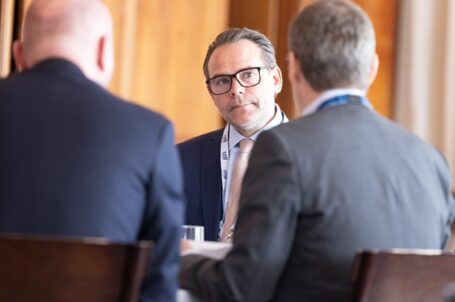
Identifying red flags is also why the team at Jentzen & Partners value physical meetings with managers. “We basically insist on meeting all managers on our shortlist. We set up interviews with different people in the organisation on a one-to-one basis and we do that because we want each to answer questions without having their colleagues or bosses sitting around them. You can only get a feeling for the intangibles, the chemistry and the culture when you actually get to those physical meetings,” Mads Jensen says. He adds that the face-to-face meeting is also an opportunity to verify some of the answers in their RFPs. “Very often we find that managers are very good at answering RFPs but when those answers meet reality, there are sometimes some serious discrepancies. I would much rather the manager to be upfront if there are issues and then we can evaluate that and decide whether we think that’s a material thing or not,” he says.
The Covid period with all the meeting and travel restrictions was obviously very challenging. This meant that many of its manager searches ended up being put on hold. “We had initiated some search processes in the first quarter of 2020 but we told our clients that we didn’t feel comfortable moving ahead because we think we get so much value and so much information from meeting managers physically. Most of our clients respected that,” Mads Jensen says. The firm did, on the other hand, do some online due diligence when clients demanded it. “When travel restrictions started to be lifted, I told my wife that you’re not going to see me for two months,” he adds. “And I was right. We had so many meetings lined up for a number of different searches. It was a very intense time but we had so much work that just needed to be taken over the finish line.”
This interview was originally published in Nordic Fund Selection Journal, issue 04, 2023.
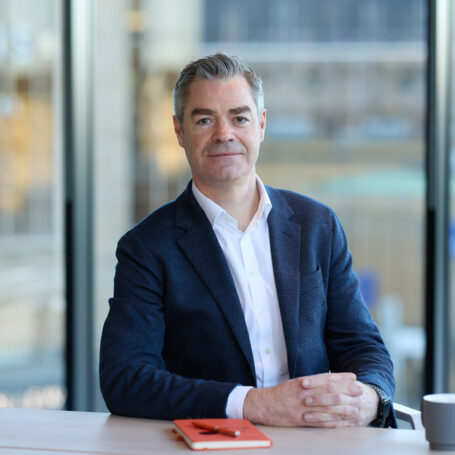
With 16 manager searches over the last year and an inflow of new clients among endowments and foundations, smaller asset managers and family offices, the Danish investment consultancy Jentzen & Partners is having a busy time. Today, the company consists of five partners and has also recently begun hiring some part-time associates. “It has been an interesting journey,” says its founder Mads Jensen, who started his career in the investment advisory services and private banking business for the Danske Bank group. During this period, he was also chairman of a number of the of the various fund companies in the banking group. When he stopped working at the bank, he initially planned to make a career out of serving on fund company boards but one thing led to another and over time, it led to the launch of an investment consultancy business. His former colleague from Danske Bank, Allan Lorentzen, also ended up joining the business.
“I think it was in 2016 when we got our first real, what I would call, investment consulting assignment. We were approached by an institution that asked us to help work out their investment strategy and their investment policy. What started as a report helping them define their investment policy developed over time and eventually we did an asset allocation study and produced a paper for them where we explained all the ups and downs of manager selection and how they should go about doing it. Basically the cookbook for how to do manager selection. But they then wanted usIf you’re new to Tell Media Group, create an account.
Read more about our memberships