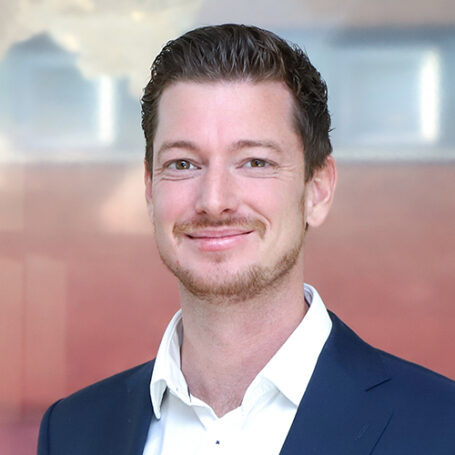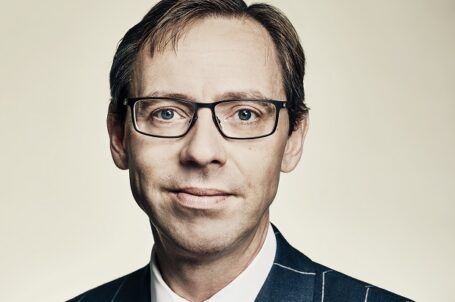
Erik van Houwelingen moved back to Amsterdam in 2020 to take up the position as CEO of Van Lanschot Kempen Investment Management and as board member of Van Lanschot Kempen. He joined the boutique asset manager from a role as head of the global client group Europe at Dimensional Fund Advisors in London. He has previously also been a CEO of Aegon Asset Management. During six years he was also a board member, chairman of the investment committee and a member of the risk committee at ABP, the Dutch pension fund for employees in the government and education sectors.
Taking on the CEO position at Van Lanschot Kempen Investment Management during the pandemic was of course a challenge. “It took nine months before I started to really meet my colleagues in person,” he says during an interview in Stockholm. Given the fact that he has been in the industry for a long time, Erik van Houwelingen says he knew the company he was joining.
“It’s a company that lives by its values, and that’s where things start. They don’t start at the bottom line and I’ve never really been part of an environment like that,” he says and adds that there is a real passion for investing at the company.
“It’s what people like and this is what they want to do. We saw that during the spring when ‘liberation day’ happened – you can really feel the organisation kicking into action. You would of course expect that from any asset manager, but that’s where I can see the professional pride kicking in,” he says.
In order to provide a glimpse behind the scenes of the corporate culture, he mentions the quarterly pizza party. This is an event where each team presents an investment case, and the audience gets to choose which investment case is the winner. “It’s pitching, it’s debating and it’s professional but then we end the evening with pizza and a beer,” he says.
Asked if the culture of the firm is one of the more important things to understand for institutional investors and selectors looking for an external partner, Erik van Houwelingen says that culture is what sets a company apart.
“Of course, if there’s no performance, then you don’t have a business. However, company culture is increasingly where I start the narrative when sitting down with clients and prospects instead of the usual focus on performance numbers. We have strong numbers, but there are others with strong numbers as well. You need that to be qualified to do business but it’s not a unique selling point,” he says.
Having strong numbers however also means you are at risk of losing teams to competitors. That’s exactly what happened shortly after Erik van Houwelingen joined as CEO.
“We have lost two teams in the last six years. First it happened with the credit team, and that was just before I joined. Then it happened again with the global small cap team some three years ago and that was a strategy that was soft closed, so at capacity thanks to very strong numbers. A large part of the team left, and we decided to rebuild. On the one hand, it’s a vote of confidence to the organisation, but at the same time it’s kind of one of the worst blows that you can think of. You have clients to worry about, and you will inevitably lose clients. The only question is how many,” he says. He adds: “Fast forward to today I’m happy to say that we’ve been successful in rebuilding the team and preserving the strong track record.”
The events made him consider what longevity means when it comes to portfolio managers and how to build it.
“It might not only be positive for a team to be together for 15 or 20 years, even if they are successful,” he says and adds: “We have talked a lot about this internally. How do you keep a team motivated when they have been doing the same thing for a long time and have been very successful. As individuals we all need challenges and even if you like where you are you might be keen for a new challenge in a new place. That’s perfectly understandable.”
Erik van Houwelingen explains that today they are more active in switching people internally – between teams or even to different parts of the organisation if that’s something they are interested in. “It’s about longevity and it’s something we have been actively working on for some time now,” he says.
He explains that the teams are now much more diverse. Not only in terms of male female, but also in the different perspectives that people bring and the backgrounds that they have. There are also more young people in the teams today.
“There’s no substitute for experience, but at the same time I also think it’s highly overrated. There’s lots of fresh angles that young people can bring, especially in changing markets with new technologies,” he says and adds that the teams are more solid today because it’s not a small homogenous group that’s been together for 15 years.
Asked about the challenges in explaining this to clients, Erik van Houwelingen says that it’s not only clients he needs to address. The traditional fund selector view would be that you look at the numbers and if the team has been together for 20 years, that’s good. What Van Lanschot Kempen is doing to build longevity is different.
“It’s an active dialogue, and it’s a difficult one. This is an industry that’s heavily dependent on metrics and quantitative data and if a senior manager leaves that will mean traffic light starts popping up. I understand that, but I also think turnover in a team is not necessarily a bad thing. The burden is of course on us to explain what’s going on in the organisation and to take investors through the storyline of managed turnover,” he says and explains that the strategic workforce planning looks entirely different now than it did some four years ago.
Asked to cast the net a bit wider and provide a view on the current state of the industry, Erik van Houwelingen says that if you don’t have distribution as an asset manager it’s becoming increasingly difficult.
“We see this in the consolidation, which is often a combination of distribution and manufacturing capabilities, and this is also why the insourcing of asset management makes sense,” he says and explain that the same is true for Van Lanschot Kempen. “Our wealth management business is an increasingly important distribution channel for us. They of course use a lot of external products and today only some seven per cent of assets on the private wealth side is allocated to Kempen products. That could probably be increased to some 10 – 15 per cent and that would be meaningful in terms of our distribution,” he says.
Another trend is partnerships and Erik van Houwelingen explains that this is something that is relevant to Van Lanschot Kempen as well.
“We have our own funds, but in the wealth management business we also use external managers and have a manager selection capability in-house. We have relationships with some 100 different managers and some 200 different strategies. That adds complexity and cost so it of course makes sense for many organisations to move towards a partnership approach. If you already have a relationship with a specific manager for one or two strategies, maybe they are good at something else as well. Maybe you can get an additional rebate if you use five of their products instead of only two,” he says.
Asked about how Van Lanschot Kempen deals with this reality as a provider with a limited number of strategies, Erik van Houwelingen says it definitely means that you have to come up with a game plan. “It was never easy, but things have gotten more difficult because of the developments that I just highlighted. It for example means that we focus on getting more out of our own distribution on the wealth side. It’s different on the institutional side, but here we’ve been successful with co-created funds. One example is our SDG generative farmland fund, which now has some EUR 500 million in assets under management. It’s a fund where we designed the solution together with one of our large pension fund clients and it attracted some of our other clients as well,” he says.
Even if it’s becoming more difficult to gain distribution and institutional clients, Erik van Houwelingen says that one thing that’s clear is that if you don’t have the conversation, you will certainly not win any business.
“The days where investors were just calling you to ask for meeting with the portfolio manager are more or less over because the competition is fierce from the distribution point of view. You have to be smart and you have to think about how you can design an engagement that makes sense for both parties,” he explains and adds that it’s about holding broad business discussions rather than approach a new client with a deal. “It’s about building a relationship over time and at some point, there might be a need for the strategy that you are offering and by that time you know the client and the client will know you,” he says.
Erik van Houwelingen moved back to Amsterdam in 2020 to take up the position as CEO of Van Lanschot Kempen Investment Management and as board member of Van Lanschot Kempen. He joined the boutique asset manager from a role as head of the global client group Europe at Dimensional Fund Advisors in London. He has previously also been a CEO of Aegon Asset Management. During six years he was also a board member, chairman of the investment committee and a member of the risk committee at ABP, the Dutch pension fund for employees in the government and education sectors. TakingIf you’re new to Tell Media Group, create an account first.
Read more about our memberships